Every software developer has had their "AI generated this" moment. Only a small percentage of them can claim they ever said "AI generated this and it is live in production."
There is a reason for that gap.
DORA's 2024 Accelerate State of DevOps Report and supporting research from GitClear's 2024 code-quality analysis found something striking. Teams using autonomous AI coding tools see commit volumes jump by 180%. But actual production releases increase by roughly 30%.
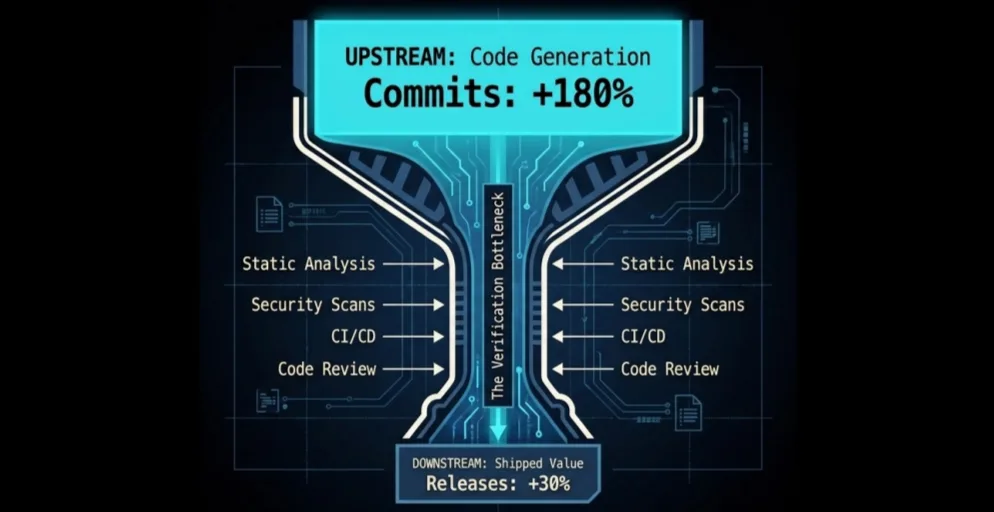
Most of the code that AI writes does not make it to production environments of enterprise IT. It gets stuck in review queues. It fails security scans. Or it gets discarded because it introduces subtle bugs that are expected to show up crawling within weeks.
But let us flip the searchlights. What are the 30% (the teams that are shipping primarily AI generated code to production) doing differently? Surely they are not using some exclusive AI models. They are using better processes.
At Neuronimbus, we use a gating framework for generative AI for software development that has worked so well we are genuinely excited about shipping AI-assisted software development to production.
In this guide, I am sharing that framework, with the hope that you can riff on it and create an even better framework for your organization’s IT operations.
But before that, we must address a simple yet important question.
Also read: Embrace AI to Revolutionize Software Development
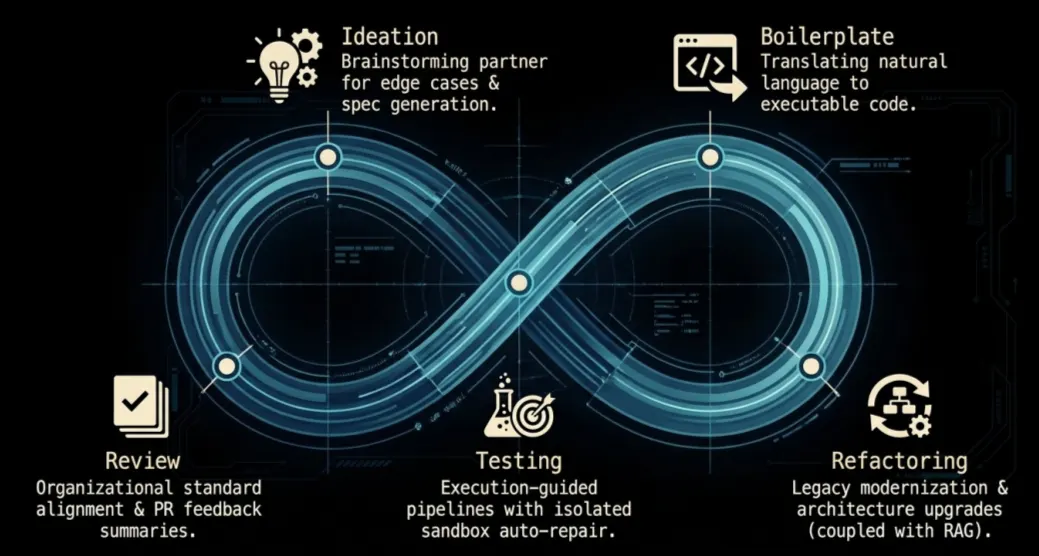
Here is how developers use AI code generation across the development lifecycle:
That covers where AI in the SDLC adds value. But there is one distinction within these tools that directly affects how much verification you need around them.
Also read: AI in DevOps: Transforming Software Delivery
If you are using AI for development, you are using one or both of these categories. They are often spoken about interchangeably, but they work very differently, and the risks they introduce are different too.
Code completion tools generate small pieces of code under your direct supervision, wherein you can see every suggestion and decide whether to accept it. Agentic coding tools generate large volumes of code with minimal human involvement per line. That gives you speed, but it also means you need a process to review a large quantity of code. The more autonomous the tool, the stronger your verification layer needs to be.
Also read: AI-Driven Digital Transformation | Future-Proof Your Business
If engineers in your team use AI tools, you have probably noticed that they are able to code faster, but your confidence in shipping code to production has not soared similarly.
Your instinct for caution with AI generated code is right. The risks of using generative AI for software development are hardly evident at the point where an engineer generates the code. The risks show up later during integration, during review, during security scan, and sometimes, in production itself.
You can find well-documented evidence of this gap from credible industry sources.
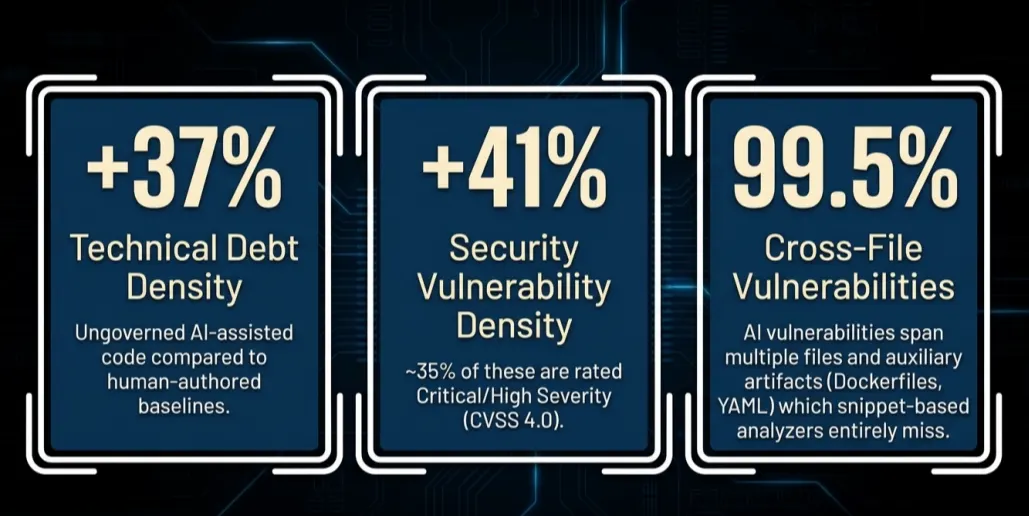
GitClear's 2024 analysis of millions of lines of AI-assisted code and multiple peer-reviewed security studies report the same pattern:
There is also a less obvious but equally important limitation. AI models work within context windows, which is the amount of code and conversation they can hold in memory at once.
As an agent works through a complex multi-step task, that context window fills up and the model starts losing track of earlier decisions. It starts revisiting problems it already solved, or working from a stale version of the codebase.
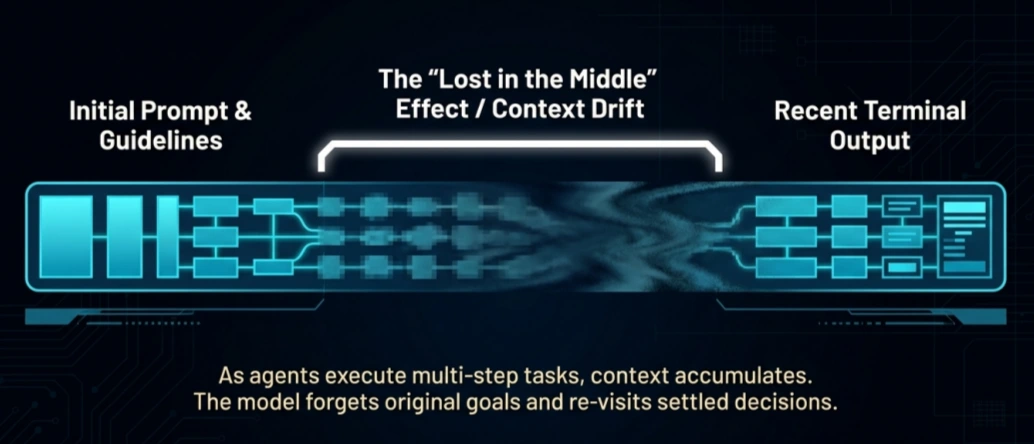
None of this means you should stop using these tools. It means you need a process layer to verify the code they produce before you export it to production.
This is the section I am most excited to share with you, because it is the heart of how we make AI-generated code production-ready at Neuronimbus.
We do not treat AI output like any other commit. We route it through a control plane that has six gates, and each gate is supposed to bar a type of failure from going any further.
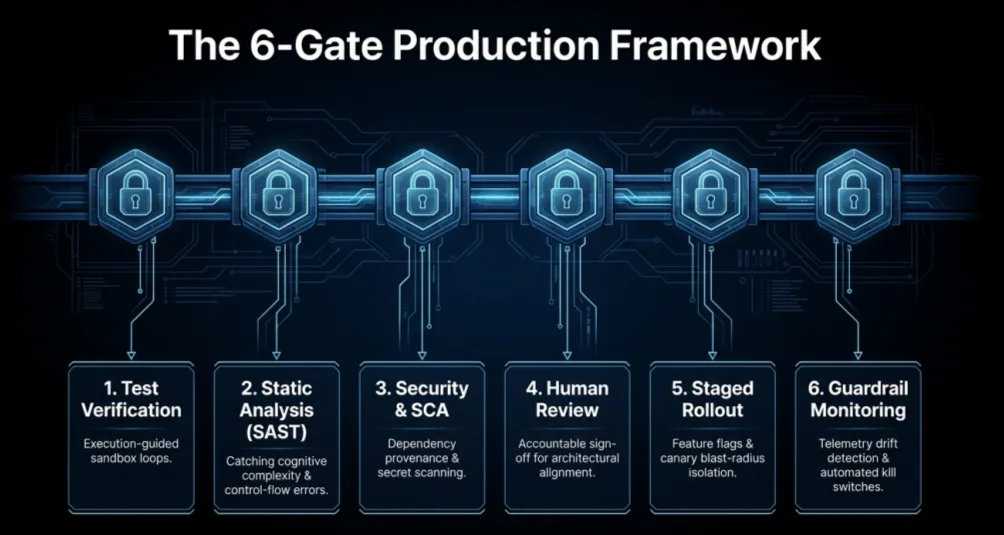
Every AI-generated change must pass automated tests. Those tests must run in an isolated sandbox environment so that a failure does not affect other builds. There is a nuance to how the tests are generated. If you let the AI write tests in a single pass, the accuracy on complex production functions will drop. But if you set up an execution-guided loop, where the test runs, fails, and the failure output feeds back to the model for revision, the accuracy will improve dramatically.
Before any human opens the pull request, automated SAST tools and linters should inspect the code for problems such as excessive complexity, unclosed resources, control-flow errors, and patterns that technically work but are brittle under real-world conditions. The purpose of this gate is that your human reviewers should not waste time catching issues a machine should have caught first.
We must understand a specific threat here. LLMs are known to hallucinate package names. Research shows roughly 19.7% of AI-suggested dependencies in Python and JavaScript point to packages that do not actually exist on public registries. Cyber-attackers know this. They monitor hallucinated names and focus on the ones that are known to recur often in AI code generator prompts and outputs. They pre-register these hallucinated package names on PyPI and npm with malicious payloads. This type of attack is called slopsquatting.
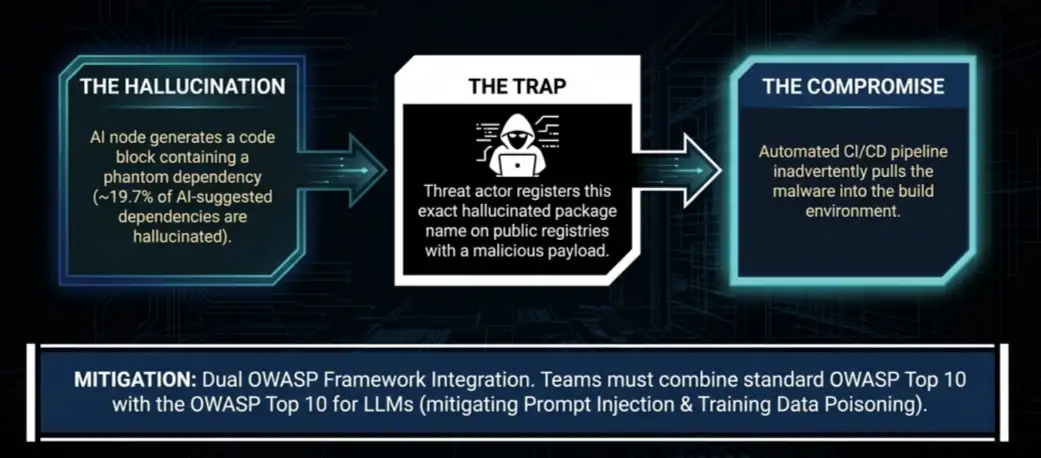
Your Gate 3 must specifically scan for package provenance and maintainer history. The purpose of this gate is to run Software Composition Analysis and secret scanning on every imported package.
You should not ask your reviewer to recheck everything your automated controls already know how to inspect.
Use human attention for what machines still struggle with.
Your reviewer should ask:
This is where AI code review should support human judgment.
Even well-reviewed software can fail under real traffic.
For code changes that are expected to affect customers, you can progressively expose the new code through:
That gives you a smaller blast radius if something goes wrong in production.
Even after deployment, you should monitor error rates, latency, operational health and the business metrics the change is supposed to affect.
If those metrics move outside agreed thresholds, your system should be able to roll back or disable the change quickly.
At that point, generative AI DevOps becomes important as it lets you build a delivery system that can constrain, observe and reverse AI-assisted changes safely.
You do not need the same ceremony for a documentation change and an authentication rewrite. So you can then add one more layer: risk classification.
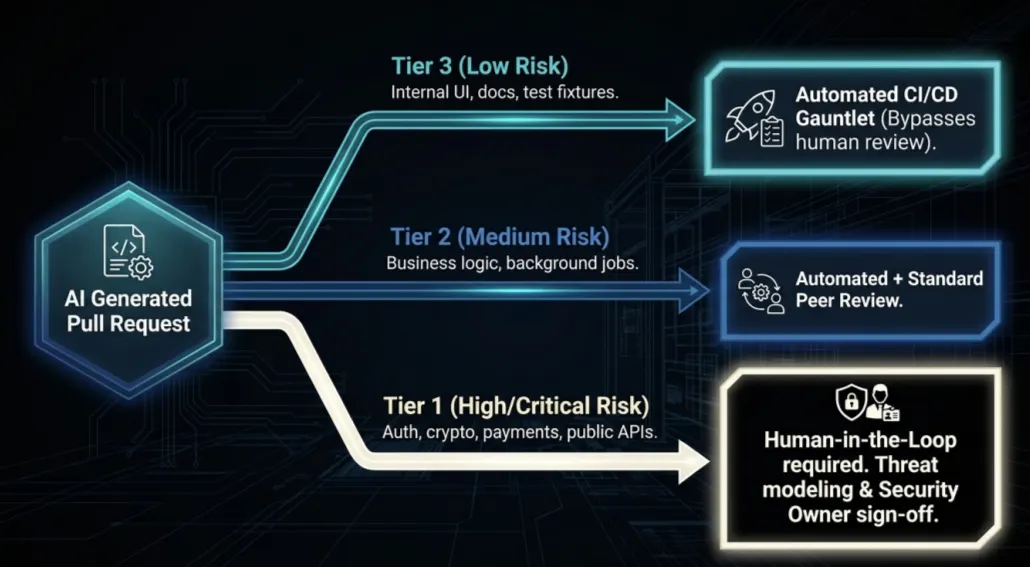
This tiering makes the framework sustainable.
AI code generation has made writing code dramatically faster, but it has not made reviewing code any faster. If anything, your review queue is longer now because there is simply more code flowing into it.
You cannot solve this by hiring more reviewers. You can solve it by splitting the review process into two layers: one that AI handles, and one that only humans can handle.
This is where AI code review is useful. You can let AI handle the mechanical work first. It can summarise a 20-file diff, identify obvious convention violations, flag duplicated logic and point out areas where testing appears insufficient.
That gives your reviewer a better starting point.
But you should not allow the AI reviewer to become the final approval authority. The reason is simple: a model can tell you whether the code looks internally coherent but it cannot reliably tell you whether the business decision behind that code is correct.
Suppose you ask AI to change an eligibility rule. The implementation may:
That is why good generative AI code review best practices should always treat technical consistency and requirement fidelity as separate metrics.
The same principle applies to AI software testing.
AI is very good at generating test scaffolding quickly. It can create happy-path tests, edge cases, mocks and candidate failure scenarios. What you need to inspect is whether the assertions prove the behaviour you actually want.
And once the code clears functional review, you still have another question to answer: is it secure enough to release?
The security problem with AI code generation is that it can generate insecure code very confidently, at high speed and across a larger surface area than a developer can be expected to inspect closely.
One example is dependency selection, because of which a model may suggest a package that does not actually exist. If someone registers that hallucinated package name with malicious code, a developer who trusts the suggestion can pull that package directly into the build. This is sometimes called slopsquatting, as I explained earlier in this guide. You should therefore treat dependency provenance as part of the security gate.
The same applies to other recurring risks:
The risks of using generative AI for software development become more serious as agents get more autonomous. An agent may modify application code, package manifests, Dockerfiles and deployment configuration within the same task. If you only scan the function it generated, you are looking at the wrong unit of risk, whereas the right unit is the entire change set.
If you are working out how to use generative AI for software development safely, the principle I would recommend is: never let AI-generated code bypass controls that human-written code would have to pass. In higher-risk systems, the controls should become stricter.
This is where many AI programmes go wrong. They measure things like lines of code, suggestions accepted, commits created, tokens consumed. All of these numbers tell you that AI is active but they do not tell you that the software delivery is better.
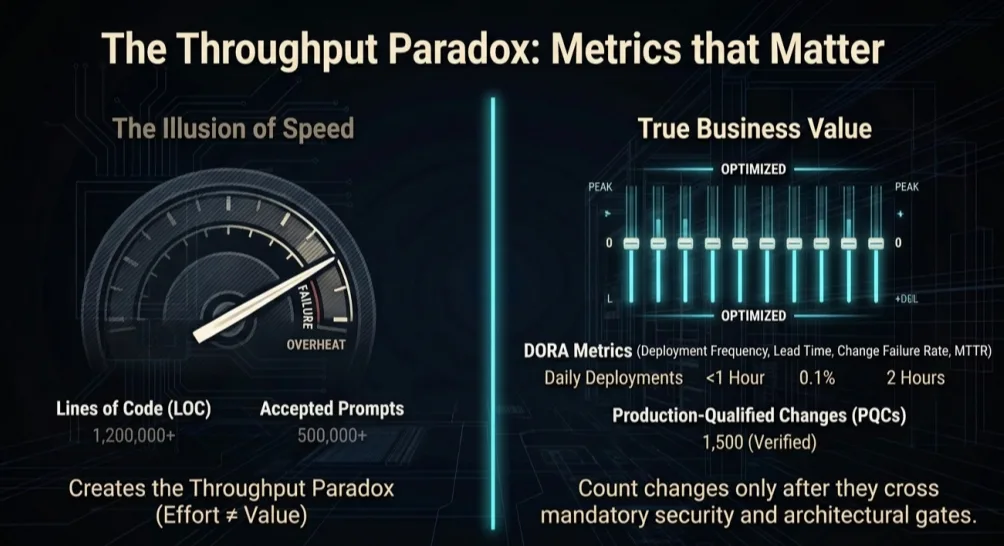
If you want to measure AI coding productivity gains, you need to start measuring further downstream. Ask whether your team is getting useful, stable software into production faster.
DORA metrics can give you a strong foundation.
That gives you a more honest view of AI-assisted software development.
I would add one more metric: Production-Qualified Changes. Instead of counting what AI generated, count what successfully passed testing, security checks, architecture review, deployment controls, and production verification. For generative AI for software development, that is ultimately the only number that matters.
The teams that ship AI-generated code to production successfully are using a framework like the six gates framework I explained in this guide.
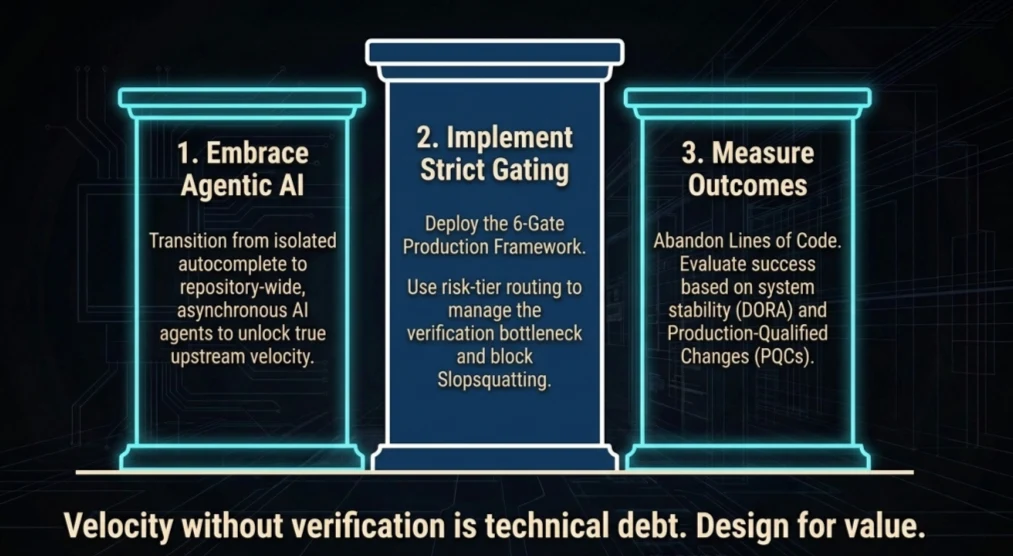
That is the framework we use at Neuronimbus. It has changed how we think about generative AI for software development.
If you are building your own version of this framework and want a second perspective on how it maps to your specific stack and team structure, we would be glad to talk it through.
AI can accelerate software development, but production deployment still requires strong testing, security, human review, and rollout controls. Neuronimbus can help you build a practical framework for safely integrating AI into your software development lifecycle.
The safest approach to do this, is to keep AI inside your existing engineering controls. You should use it to generate or modify code, but subject is to the same testing, security scanning, review and deployment checks that human-written code must pass.
In generative AI vs agentic coding tools, the main difference is autonomy. Generative tools produce suggestions or code. Agentic tools can plan work, modify multiple files, run commands, execute tests and iterate toward a larger engineering goal.
It should not. For AI-generated code to be production-ready AI code, it should first have passed through defined quality, security, review and release gates before deployment.
Generative AI DevOps works best when AI is integrated into existing CI/CD controls. Generated changes should trigger automated tests, SAST, dependency scanning, human approvals where required, staged deployment and production monitoring.
That depends on the organisation and regulatory context, but internal traceability can be useful.
It can perform a useful first-pass review, but it should not be your only reviewer. The same model may preserve the assumptions it used when generating the code.
It can reduce effort in specific tasks, but the overall effect depends on your delivery system. If faster generation creates larger review queues, more defects or more rework, some of the apparent productivity gain will disappear downstream.
A strong generative AI software development lifecycle connects generation with verification. AI can assist with requirements, code, testing and review, but every change should move through risk-based quality, security, approval, deployment and monitoring gates.

Let Neuronimbus chart your course to a higher growth trajectory. Drop us a line, we'll get the conversation started.






Call Us

Schedule a Call


Your Next Big Idea or Transforming Your Brand Digitally
Let's talk about how we can make it happen.