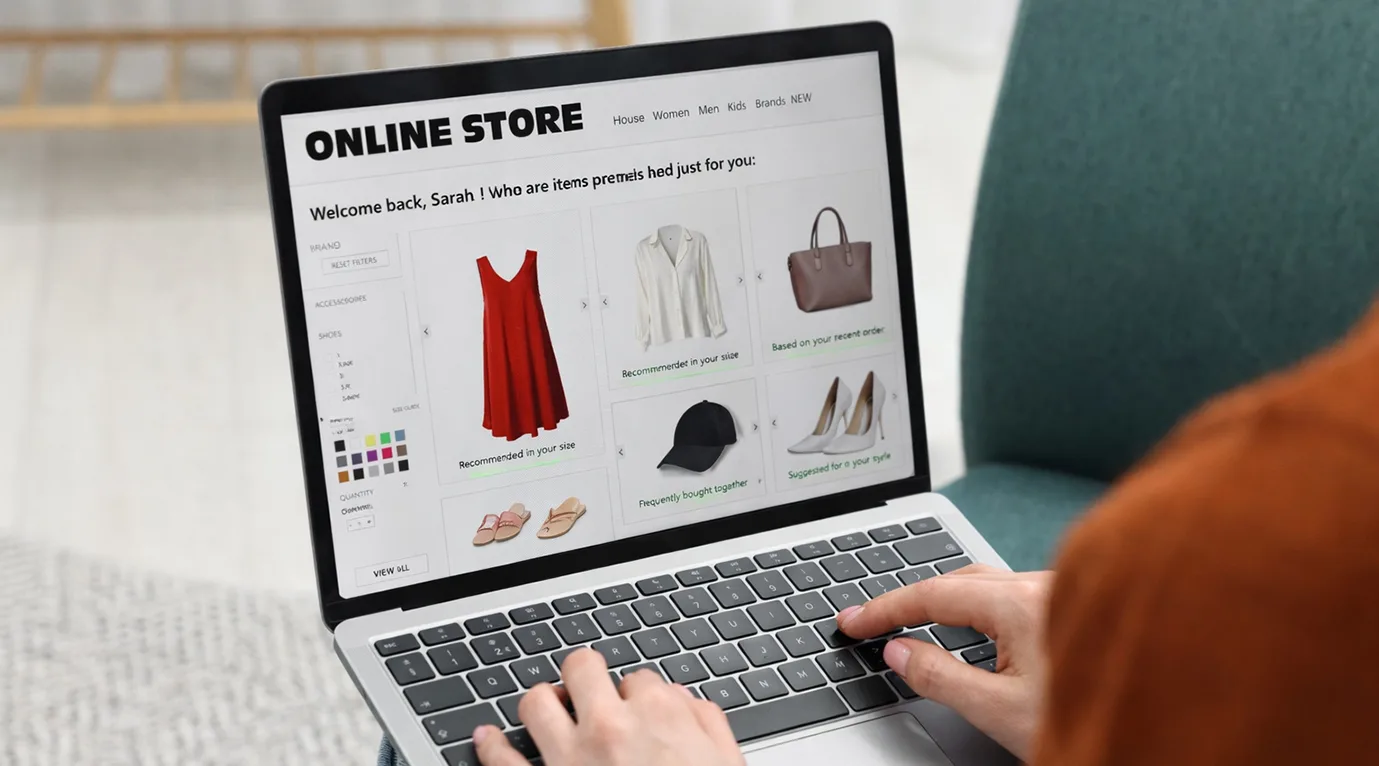
Log into a good e-retail website today and you will notice something interesting.
The experience feels almost as if the brand already knows you.
The products on the homepage match your interests.
The offers arriving in your inbox feel relevant.
Even the recommendations in a mobile app often reflect your previous purchases.
This shift is the result of retail personalization.
Retailers now sit on enormous volumes of customer data generated through:
When used correctly, this data allows brands to understand individual customer preferences and behaviors.
That insight is what powers personalization in retail today.
So instead of broadcasting one message to everyone, retailers can deliver experiences tailored to individual customers, sometimes in real time.
Customers increasingly expect brands to recognize their preferences, to the extent that retailers that fail to do this often lose engagement and loyalty.
But personalization is no longer just about marketing tools or recommendation widgets.
True personalized retail requires a technology foundation that connects data, AI models, and customer touchpoints across the entire organization.
Also read: Empowering Retail Success with Business Intelligence
When people hear the term retail personalization, they think of product recommendations on ecommerce websites.
That is certainly one part of it.
But the reality is that personalization in retail now happens across multiple channels and customer touchpoints.
.webp)
The most visible form of personalized retail appears in ecommerce platforms.
Many online stores dynamically adapt their content based on customer behavior.
Examples include:
Amazon is the classic example.
Its recommendation engine analyzes millions of customer interactions to suggest products that shoppers are most likely to buy.
In many cases, these recommendations generate a significant portion of ecommerce revenue.
Customers rarely interact with a retail brand through just one channel. Instead they browse products on mobile apps.
They receive emails and promotions; they visit stores; they engage with loyalty programs.
Retailers are increasingly connecting these touchpoints into a unified experience.
For example, a customer might:
This type of personalization retail strategy ensures that every interaction builds on the previous one.
Brands like Nike and Starbucks have invested heavily in this approach.
Their mobile apps combine purchase history, location data, and loyalty engagement to generate tailored offers and experiences.
The result is a customer journey that feels continuous rather than fragmented.
Physical retail is also evolving.
Stores are increasingly integrating digital technology to personalize in-store experiences.
Examples include:
Sephora’s Beauty Insider program is a good example.
Customer profiles connect online browsing behavior with in-store purchases, allowing sales associates and systems to recommend products that match previous preferences.
This approach blends digital intelligence with physical retail environments.
And it highlights an important point.
Modern personalization in the retail industry is not confined to ecommerce but it spans the entire customer journey.
But delivering these experiences consistently requires something far more complex behind the scenes.
Retailers need a technology architecture capable of collecting data, analyzing behavior, and responding instantly.
So the natural next question becomes: What does the infrastructure behind retail personalization actually look like?
Also read: Predictive Analytics in Retail: Trends & Impact
Personalized experiences may look simple from the outside.
But behind the scenes they rely on a fairly sophisticated technology ecosystem.
At its core, retail personalization depends on the ability to capture customer signals, interpret them intelligently, and respond in real time.
This typically requires a layered architecture.
.webp)
Let us break it down.
Everything starts with data.
Of course, retailers collect customer signals from a wide range of systems, but typical sources include:
Each interaction creates a behavioral signal.
For example:
Individually, these signals are small pieces of information, but when combined, they create a powerful understanding of customer behavior.
Retail data rarely lives in one place; instead, customer information is fragmented across different systems.
A customer data platform solves this problem by creating a unified profile for each customer.
It brings together data from:
The result is a single customer view which can be the foundation of personalization in retail industry platforms.
Once data is unified, retailers can apply artificial intelligence to analyze patterns and predict behavior.
Common AI applications in retail personalization are:
For example, recommendation engines often use collaborative filtering techniques.
These systems analyze what similar customers have purchased and use that information to generate suggestions. The more customer data these models receive, the more accurate they become.
The next layer determines what action should happen next.
A decision engine evaluates customer context and determines the most relevant experience.
Examples are:
This happens in real time. For instance, if a customer repeatedly views a product category, the system may immediately prioritize related products across the site.
This responsiveness is what makes personalized retail feel intelligent and seamless.
Finally, personalization must be delivered across customer channels.
These include:
The goal is consistency. Customers should experience the same level of personalization regardless of where they interact with the brand.
When these systems work together effectively, retailers can deliver highly tailored experiences across the entire shopping journey.
Once the technology foundation is in place, retailers can begin applying retail personalization across the customer journey.
Instead of being an abstract technology capability, personalization in retail begins to directly influence how customers discover products, engage with brands, and complete purchases.
Let us look at some of the most important use cases.
The most widely known example of retail personalization is the product recommendation engine.
These systems analyze customer behavior to suggest relevant products.
Typical inputs include browsing history, past purchases, search patterns, and items frequently bought together.
Amazon popularized this model.
If you have ever seen sections like “Customers who bought this also bought” and “Recommended for you”, then you have experienced recommendation-driven personalized retail.
These suggestions are generated using machine learning models that analyze patterns across millions of transactions.
The impact can be significant.
Recommendations often increase cross-sell opportunities, average order value, and product discovery.
For many ecommerce platforms, recommendation engines now drive a substantial portion of revenue.
Another powerful application of personalization in retail industry platforms is targeted promotions.
Traditional retail promotions treated every customer the same. Everyone received the same discount or offer. But retailers now understand that not all customers respond to the same incentives.
Personalized promotions can be based on:
For example, a customer who frequently purchases athletic wear may receive a discount on running shoes. Meanwhile, another shopper might receive an offer on fitness accessories.
Tesco’s Clubcard program is a well-known example.
By analyzing customer purchase history, Tesco delivers tailored coupons that align with individual shopping patterns.
This approach improves marketing efficiency while increasing customer engagement.
Modern ecommerce platforms increasingly adapt the shopping experience itself.
Instead of showing the same homepage to every visitor, retailers dynamically adjust content based on user behavior.
Examples include:
For instance, a fashion retailer might prioritize formal wear for one customer and sportswear for another.
The system simply learns from previous browsing behavior.
These adaptive experiences make the shopping journey smoother and more relevant.
And they represent an important evolution in personalized retail.
Customers rarely interact with brands through a single channel.
They move between devices and platforms throughout their buying journey.
A typical customer might:
Retailers are increasingly connecting these interactions and this is where omnichannel retail personalization becomes powerful.
For example:
Nike’s membership ecosystem works in this way.
The brand combines data from ecommerce activity, app usage, and loyalty engagement to create personalized experiences across every touchpoint.
The result is a more cohesive relationship between the brand and the customer.
Physical retail environments are also evolving as sStores are becoming digitally connected spaces capable of delivering personalization in retail.
Examples ae:
Sephora has been particularly effective in this area.
Its Beauty Insider program links online customer profiles with in-store purchases, which lets staff and digital systems provide tailored recommendations.
This combination of digital intelligence and physical retail creates a more engaging shopping experience.
And it highlights an important truth. The most successful retail personalization strategies extend across the entire retail ecosystem.
Despite the benefits, many organizations find retail personalization difficult to implement.
The challenge is rarely the concept itself.
It is the underlying technology and data infrastructure.

Customer information lives across multiple systems such as ecommerce platforms, POS systems, CRM tools, marketing automation platforms, and loyalty databases.
When these systems are disconnected, retailers lack a unified customer view.
Without unified data, personalization in retail industry systems becomes inconsistent.
Many retail organizations operate on legacy systems that were not designed for modern data processing. These systems struggle with real-time data processing, AI-driven decision making, and large-scale customer analytics.
As a result, implementing personalized retail experiences becomes technically challenging.
Personalization requires systems to communicate seamlessly. Retailers must connect platforms such as:
Building these integrations requires strong engineering expertise. Without it, personalization initiatives remain isolated experiments rather than scalable capabilities.
Machine learning models must be trained, deployed, and continuously optimized.
Retail data environments evolve rapidly.
Customer preferences change.
Product catalogs expand.
AI systems must adapt to these changes while maintaining accuracy, but managing this process requires specialized technical expertise.
Retailers must also ensure that personalization efforts comply with data protection regulations.
These may include:
Responsible data practices are essential for maintaining customer trust.
These challenges explain why many retailers seek external expertise when implementing retail personalization. And this is where experienced digital transformation partners become valuable.
Delivering personalization in retail requires more than isolated marketing tools.
It requires a robust technology ecosystem that connects data, AI models, and customer channels.
This is where Neuronimbus supports retail organizations.
Our approach focuses on building practical, scalable personalization systems that integrate seamlessly into existing enterprise environments.
Neuronimbus combines:
Our objective is simple.
Help retailers transform fragmented customer data into meaningful experiences that improve engagement and revenue.
Let's have that vital conversation.
Neuronimbus solutions are designed to integrate with existing enterprise platforms while maintaining the security and scalability required for large retail operations.
When implemented effectively, retail personalization becomes more than a marketing capability.
It becomes a strategic engine for growth.
Retail personalization is the process of using customer data, behavior, and preferences to deliver tailored shopping experiences across websites, mobile apps, emails, loyalty programs, and physical stores.
Personalization helps retailers improve customer engagement, increase conversions, boost loyalty, and create more relevant shopping experiences that match individual customer needs and interests.
AI helps retailers analyze customer behavior, predict buying patterns, power recommendation engines, create customer segments, and deliver real-time personalized offers and product suggestions.
Common examples include product recommendations, personalized discounts, dynamic homepage banners, tailored email campaigns, loyalty-based offers, and in-store digital recommendations.
Retailers often struggle with fragmented customer data, legacy systems, platform integration issues, AI model scaling, and data privacy compliance while building effective personalization strategies.

Let Neuronimbus chart your course to a higher growth trajectory. Drop us a line, we'll get the conversation started.






Call Us

Schedule a Call


Your Next Big Idea or Transforming Your Brand Digitally
Let's talk about how we can make it happen.