
We live in times where customer journeys are becoming more complex and support teams are expected to resolve issues faster without increasing operational costs.
Many organizations tried to solve this using AI in customer care.
First they implemented chatbots, but most of these systems were built on rule-based automation. They could answer FAQs, route tickets, and handle basic requests. Once a conversation moved beyond predefined scripts (which happened fast, and happened almost always), the system would fail and escalate the case to a human agent.
That model has reached its limits.
Customer problems do not follow a script. They involve multiple systems, multiple steps, and sometimes multiple departments.
What organizations need now is something different.
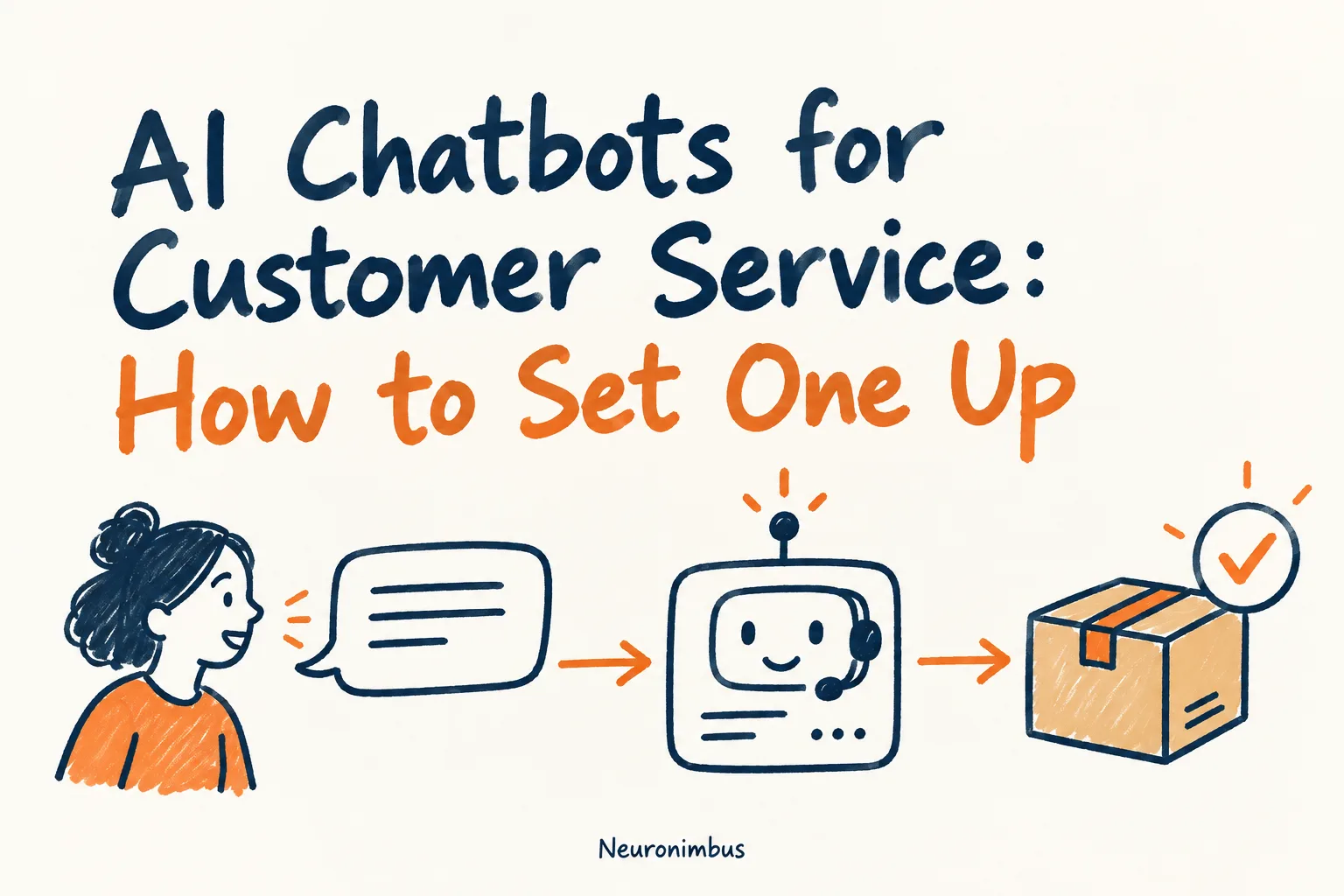
This is where agentic AI in customer service enters the picture.
Agentic AI represents the shift from simple conversational automation to goal-driven AI agents that can resolve customer problems end-to-end.
Instead of just answering questions, these systems can:
To understand why this matters, we first need to clearly understand what agentic AI in customer care actually means.
Also read: OmniChannel Customer Experience
The term agentic AI refers to AI systems designed to operate as autonomous agents.
These systems don’t just generate responses, instead they pursue goals.
In the context of agentic AI customer care, the goal is simple: resolve the customer’s issue.
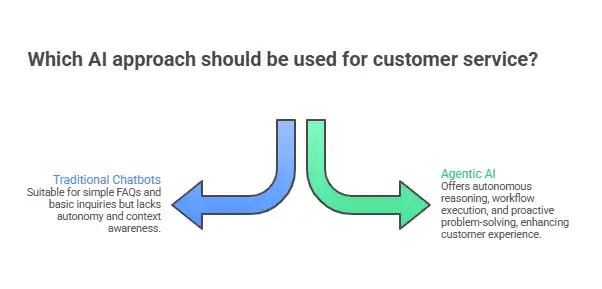
To do that, the AI agent can:
In other words, an AI customer support agent behaves more like a digital employee than a chatbot.
A simple example illustrates the difference.
Imagine a customer asks:
"My order hasn’t arrived. Can you check what’s happening?"
A traditional chatbot might do one of two things:
An AI customer support agent, on the other hand, can go further.
It can:
That is why agentic AI for customer service is quickly becoming a major focus for enterprise support transformation.
But this raises an important question.
How does an AI system actually perform these actions?
Also read: NeuroCRM Customer Feedback Management
When people hear the term AI customer support agent, they imagine a smarter chatbot.
But under the hood, the system works very differently.
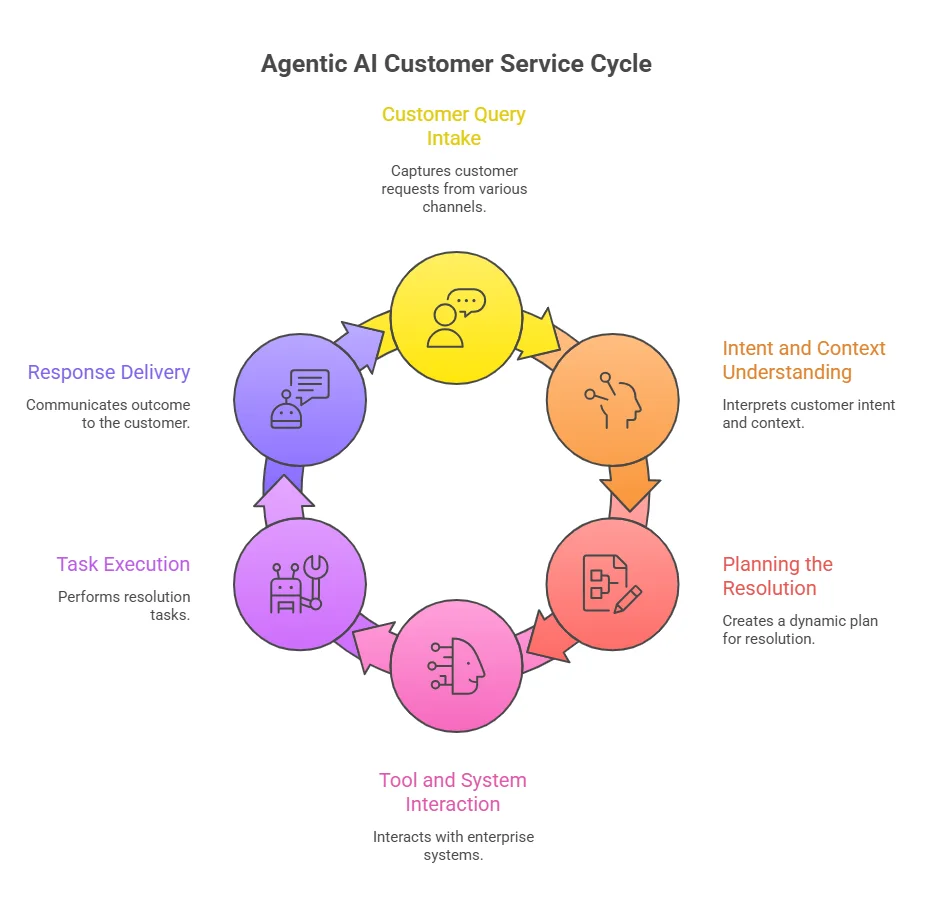
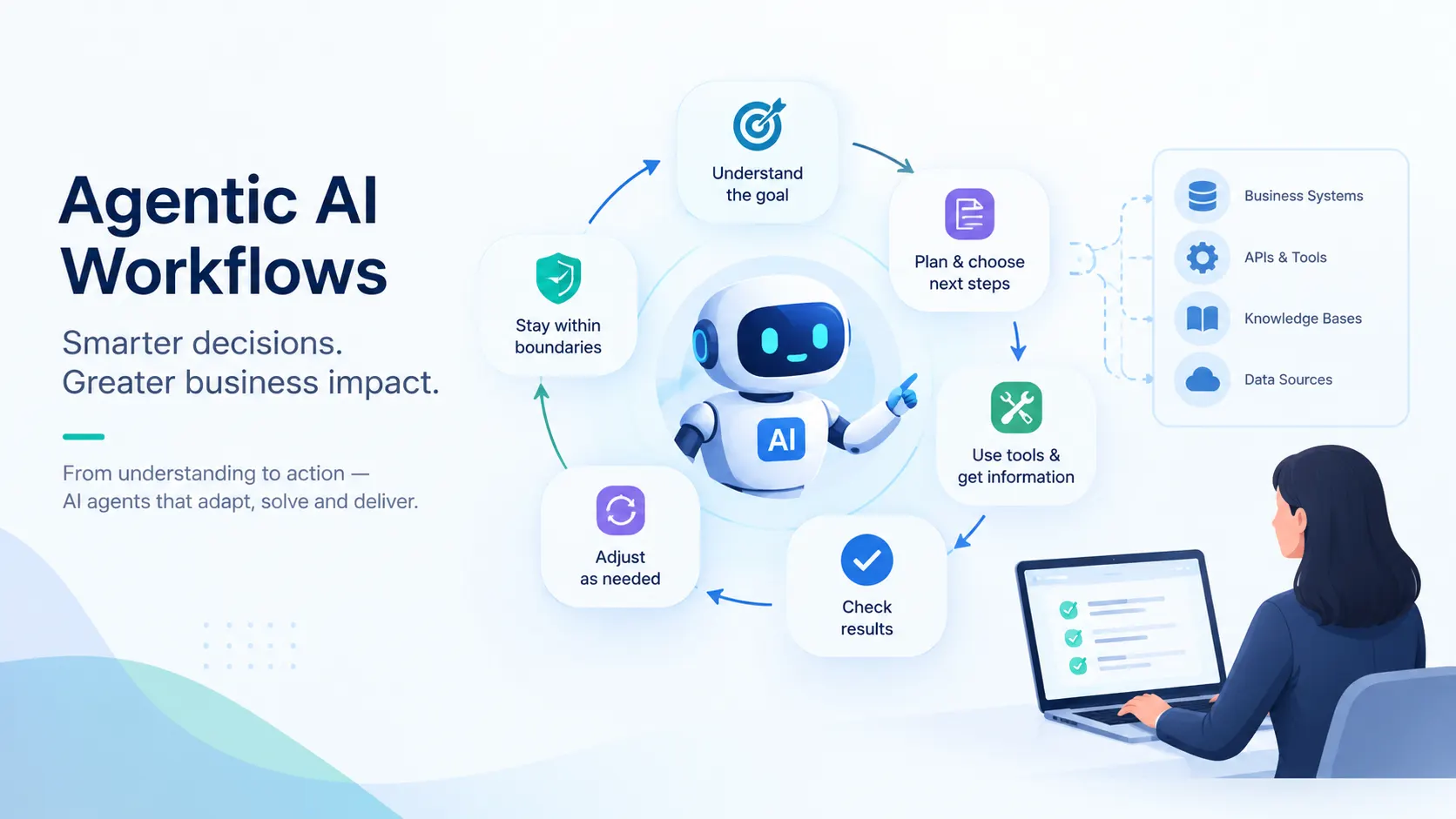
Agentic AI systems operate through a structured process that resembles how human support agents solve problems.
The process begins when a customer submits a request.
This may come from multiple channels. The system captures the query and begins analyzing it.
The AI interprets what the customer actually wants.
It evaluates the intent behind the request, previous interactions, customer history, and account data.
This allows the AI in customer care systems to understand not just the message, but the context behind it.
Once the intent is clear, the AI agent creates a plan.
For example, resolving a billing issue might require:
Instead of following a fixed script, the system determines the required steps dynamically.
The AI agent then interacts with enterprise systems.
Typical integrations include CRM platforms, ticketing systems, order management systems, payment platforms, and knowledge bases.
This is where agentic AI for customer service becomes powerful.
The AI does not just read data.
It uses enterprise tools to perform actions.
Once the required information is gathered, the AI executes the resolution.
Examples include resetting passwords, updating shipping addresses, issuing refunds, creating support tickets, and scheduling service visits.
In many cases, the issue can be resolved completely without human intervention.
Finally, the AI communicates the outcome to the customer.
This may include:
The entire process can happen in seconds.
For organizations dealing with thousands of daily interactions, this level of automation can dramatically change support operations.
But all of this is only possible if the right technology architecture is in place.
That architecture is what makes agentic AI customer care systems reliable, scalable, and enterprise-ready.
Behind every effective AI customer support system is a carefully designed technology stack.
Agentic AI systems are not just language models connected to a chat interface, but they are multi-layered architectures that combine AI reasoning, enterprise integrations, and workflow orchestration.
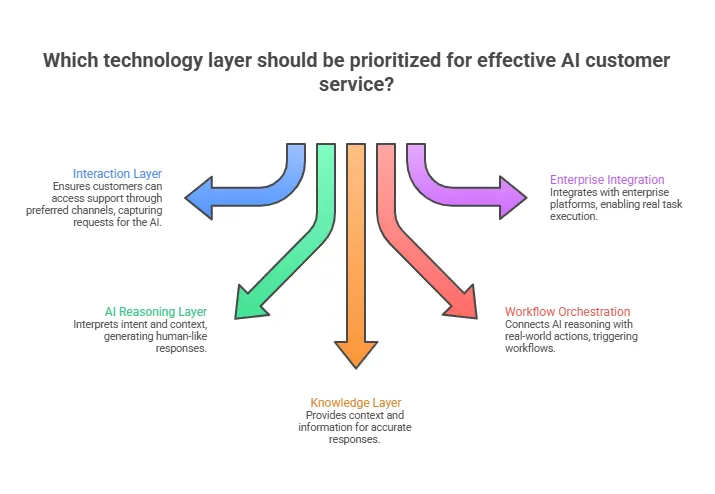
This is the layer where customers interact with the system.
Common channels include:
The goal here is simple: customers should be able to access support through whichever channel they prefer.
The interaction layer captures the request and passes it to the AI reasoning engine.
This is the brain of the system.
The reasoning layer is powered by large language models and agent frameworks that can interpret intent and understand context, determine next actions, and then generate responses.
This layer enables the system to operate as a customer care agent AI rather than a scripted chatbot.
However, reasoning alone is not enough. The AI must also access relevant knowledge.
Customer support relies heavily on information.
Policies, product documentation, order records, troubleshooting guides, and historical interactions all play a role.
The knowledge layer provides this context.
Typically it includes:
Many modern systems use retrieval-augmented generation (RAG) to connect AI models with internal knowledge repositories.
This allows the AI customer support agent to generate accurate, context-aware responses.
This layer connects AI reasoning with real-world actions.
It enables the system to trigger workflows.
Instead of static scripts, this layer allows the AI agent to coordinate multiple steps dynamically.
Finally, the system must integrate with enterprise platforms.
Without this layer, AI cannot execute real tasks.
When these integrations are in place, agentic AI customer care systems move beyond conversation and begin to operate as operational tools.
They become capable of resolving real business processes.
And once this architecture is deployed, organizations can unlock a wide range of powerful support automation scenarios.
Not every customer service workflow is an equal candidate for agentic AI.
The highest-value deployments follow a clear maturity curve, starting with high-volume, well-defined journeys where actions are low-risk and reversible, then expanding toward complex transactional and proactive use cases as governance and trust are established.
Here is how that progression looks across enterprise support operations.
The first and most immediate use case is closing the gap between a customer's request and its resolution without human involvement.
Where a traditional chatbot would retrieve an order status or FAQ answer and stop there, an agentic AI system goes further: it authenticates the user, queries the relevant system, takes the required action (update, cancel, rebook, refund), confirms completion, and updates the CRM record, all in a single interaction.
Common high-readiness journeys for this pattern include billing address and payment method updates, subscription changes and cancellations, appointment rescheduling, password and access resets, and shipping exception handling.
Each of these is high-volume, follows defined logic, and has a measurable success condition. Enterprises deploying agentic AI in these categories typically see first response times shrink from hours to minutes, and containment rates rise substantially.
For workflows that are too complex or sensitive for full autonomy, agentic AI still delivers significant value as an agent-side assistant.
In this model, the AI operates in the background: pulling relevant customer history, surfacing knowledge base articles, drafting suggested responses, and proposing next-best actions, all in real time, inside the agent's existing interface. The human agent approves, edits, or sends.
A large-scale field study of a customer service AI assistant found productivity gains (measured as issues resolved per hour) of approximately 14% on average, with notably larger gains for less-experienced agents. That finding matters for enterprise CIOs: agent assist can deliver ROI quickly, building the data, governance, and organisational trust needed to extend autonomy over time. It is the safest enterprise onramp to full agentic deployment.
The most strategically differentiated use case is proactive orchestration. Here, AI agents do not wait for a customer to raise a problem. They monitor signals across connected systems, detect anomalies or likely failure points, and resolve issues before contact is initiated.
Examples include billing discrepancy detection and correction, shipment delay alerts with proactive rebooking or compensation offers, claims status nudges that prevent inbound calls, and SLA breach prevention triggers in B2B service contexts.
This "self-healing" capability shifts customer service from a cost centre that reacts to problems to a value centre that prevents them. Analysts and enterprise deployment teams consistently identify this proactive orchestration tier as the highest-return application of agentic AI.
Agentic AI's potential is real, but so is its failure rate.
A candid assessment of the enterprise deployment landscape makes this clear: an analyst forecast warns that over 40% of agentic AI projects will be cancelled by the end of 2027, with escalating costs, unclear business value, and inadequate risk controls cited as the primary drivers. For CIOs, this is not a theoretical risk. It is the likely outcome for organisations that deploy without the right architecture, governance, and operating model in place.
The core challenge with agentic AI is consequence. When an AI system can take actions inside enterprise systems (update records, trigger payments, send communications, modify service configurations), errors are not just conversational missteps. They carry operational, financial, and reputational weight. This raises the bar for governance in ways that a standard chatbot deployment does not require.
Enterprise-grade governance for action-taking agents means several things in practice: role-based access controls that limit which tools any given agent can invoke; policy-as-code checks that evaluate an action's appropriateness before execution; human-in-the-loop approval gates for high-risk or high-value transactions; full audit trails for every decision and action; and continuous monitoring for anomalous behaviour.
Agentic systems introduce a specific class of security risk that does not exist in traditional software: prompt injection.
Because the agent processes natural language from multiple sources (customer messages, retrieved knowledge, tool outputs) a malicious or malformed input can, if not properly controlled, redirect the agent's behaviour in unintended ways.
In a customer service context, this means an adversarial message could potentially instruct an agent to perform actions outside its intended scope, exfiltrate data, or bypass verification steps.
Neuronimbus works with enterprise technology and operations leaders to close the gap between agentic AI's potential and its production reality. Our work is grounded in a consistent observation across more than fifty enterprise AI engagements: the organisations that realise durable value from agentic AI are not those that deploy the most advanced model. They are those that redesign workflows, build governance by design, and scale incrementally with measurement at every step. That is the delivery model we bring.
The question of whether to build, buy, or partner for agentic AI is one that enterprise technology leaders are actively navigating. Off-the-shelf platforms offer speed-to-first-demo but routinely require significant customisation to integrate with legacy CRM, ERP, and contact centre stacks and rarely include the governance architecture that regulated industries require.
Building in-house provides control but demands AI engineering talent and programme management capacity that most enterprise IT organisations do not have available at the pace the market requires.
The partner model is to work with a vendor who brings architecture expertise, deployment experience, and deep integration capability.
Neuronimbus brings a track record in enterprise systems integration, AI engineering, and contact centre modernisation, combined with the governance and security competencies that separate successful production deployments from cancelled pilots.
If your organisation is evaluating agentic AI for customer service and looking for a deployment partner who can take you from business case to production we would welcome a chance to speak.
Agentic AI in customer service refers to autonomous AI systems that can understand customer intent, plan resolutions, interact with enterprise tools, and complete support tasks end-to-end without relying only on scripted responses.
Traditional chatbots mainly follow predefined scripts and handle FAQs or basic routing, while agentic AI can reason autonomously, access multiple systems, trigger workflows, and resolve more complex customer issues independently.
Common use cases include order tracking and issue resolution, billing and payment updates, password resets, appointment rescheduling, agent assist, proactive support, and workflow automation across customer service operations.
Agentic AI customer service systems typically require an interaction layer, AI reasoning engine, knowledge layer, workflow orchestration, retrieval-augmented generation (RAG), and integrations with CRM, ticketing, payment, and enterprise systems.
Organizations often face challenges such as legacy system integration, governance and risk controls, prompt injection threats, data privacy concerns, workflow complexity, and proving clear business value at scale.

Let Neuronimbus chart your course to a higher growth trajectory. Drop us a line, we'll get the conversation started.






Call Us

Schedule a Call


Your Next Big Idea or Transforming Your Brand Digitally
Let's talk about how we can make it happen.