Artificial Intelligence (AI) is revolutionizing industries at an unprecedented pace, and the automotive repair sector is no exception. With AI transforming diagnostics, maintenance, inventory management, and customer service, it’s no surprise that some view this as “AI taking over the vehicle repair industry.” But is this transformation a disruption or an opportunity?
AI is optimizing every single aspect of automotive industry and according to a report, AI in automobile market is projected to reach $74.5 billion by 2030, growing with a compounded annual growth rate of 37.4 % from 2023. AI is going to take over automobile industry as it is expected that over 33 million autonomous vehicles are expected plying on the roads by 2040, according to a report by statista. These statistics offer a very promising outlook for the future of the industry. This article delves deep into how AI in automotive is reshaping the repair landscape, creating smarter, more efficient solutions for businesses and customers alike.

Imagine a tool that can pinpoint a car’s issue before you even lift the hood. AI-powered diagnostic tools, such as CarMD, analyze data from sensors embedded in vehicles to identify problems with unprecedented accuracy. These systems eliminate guesswork, enabling mechanics to focus on solutions rather than troubleshooting.
For example, predictive maintenance; a standout application of AI – analyzes data patterns to foresee potential breakdowns. General Motors leverages this technology by using sensor data to predict part failures before they occur, minimizing unexpected repairs. This approach benefits repair shops, allowing them to preemptively schedule maintenance, reduce costs, and build customer trust.
AI-driven robots are making complex tasks like welding and painting more precise. Audi, for instance, employs robots to ensure perfect paint jobs and flawless assembly. By automating labor-intensive tasks, repair shops can increase efficiency while maintaining high-quality standards.
For auto repair businesses seeking innovative solutions, partnering with experts in digital strategy and product scaling can be a game-changer. Services like these streamline integration and ensure businesses can adapt to the rapidly evolving AI landscape.
Managing inventory is a perennial challenge for repair shops. AI systems like PartsTech use predictive analytics to maintain optimal stock levels. By analyzing historical data, customer preferences, and seasonal trends, these systems ensure that the right parts are always available, reducing downtime and improving service delivery.
Repair shops adopting AI-powered inventory systems report significant reductions in overstocking and shortages. This not only enhances operational efficiency but also improves customer satisfaction. Imagine never having to tell a customer, “We’ll need to order that part – it’ll take a few days.” AI makes that promise a reality.
Customer relationship management has become smarter and more personalized with AI. Platforms like Salesforce allow auto repair shops to track customer preferences, predict service needs, and offer tailored promotions. This not only strengthens customer relationships but also drives repeat business.
AI-powered virtual assistants, such as Hyundai’s Blue Link, streamline customer interactions. These tools can schedule appointments, provide vehicle health updates, and even answer FAQ – all without human intervention. For busy repair shops, this translates to better customer service and reduced administrative burdens.
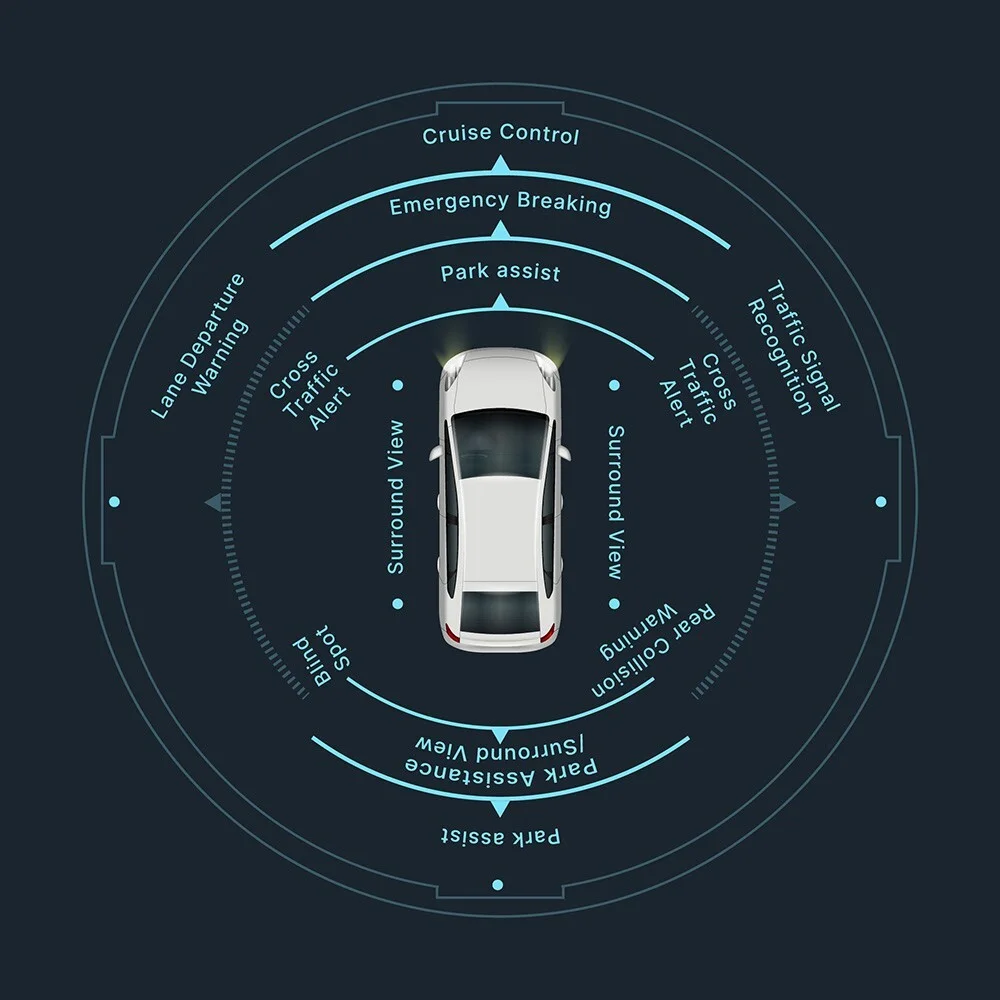
AI is making roads safer with systems like ADAS. These technologies use AI to analyze sensor data in real time, enabling features like emergency braking, lane-keeping assistance, and adaptive cruise control. As these systems become more prevalent, repair shops must adapt to service and maintain such advanced features.
Augmented reality (AR) and virtual reality (VR) are revolutionizing how technicians approach complex repairs. Porsche, for instance, equips technicians with AR glasses that overlay digital instructions onto real-world components. This reduces errors and speeds up repairs, ensuring that customers receive faster and more reliable service.
Businesses focusing on innovation consulting and application development can enable repair shops to harness these technologies effectively, positioning themselves as leaders in this AI-driven transformation.
The automobile industry is being transformed by AI which is ready to revolutionize the future of automobile industry. AI is completely changing the way people travel. Let’s look at the benefits of the AI in automobile industry:
Advanced Driver Assistance Systems will play a pivotal role in enhancing road safety and keeping the drivers safe. AI-enabled algorithms and sensors make it possible for hazards to be detect in real time, activating emergency response systems on time and preventing collisions.
Voice activated controls, adaptive navigation, predictive information etc. cater to drivers and passengers in the vehicle by providing effortlessly cater to individual needs, preferences and comfort. This will ensure better driving experience and safer roads.
AI adoption in the automobile industry will contribute significantly to reducing emissions and overall impact of vehicular mobility on the environment. AI can provide insights into choosing better-more efficient route planning, optimizing driver behavior which will lead to reduced emissions.
Although the world is going electric, we still have many decades ahead of us for traditional combustible fuel based vehicular mobility. AI can help optimise driving behavior, route selection and ultimately reduce fuel usage.
With self-driving cars becoming more advanced, repair shops must prepare for a future where AI systems handle most driving functions. Autonomous vehicles rely on a suite of technologies – cameras, LiDAR, radar, and neural networks – that require specialized maintenance. Shops that invest in training and tools for these systems will have a competitive edge.
Electric vehicles (EVs) are another frontier where AI is playing a crucial role. From optimizing battery usage to enhancing vehicle performance, AI ensures that EVs are efficient and reliable. Repair shops servicing EVs must adapt to AI-driven diagnostic tools and predictive maintenance systems tailored to electric drivetrains.
AI also supports sustainability efforts by optimizing energy consumption in repair shops and promoting eco-friendly practices. For instance, digital twins; virtual replicas of vehicles – allow shops to test repairs and modifications without wasting physical resources.
Predictive analytics, route optimization and operational analytics can be integrated in AI – powered fleet management systems to improve efficiency and reduce costs.
AI being integrated into the automobile sector has several advantages, but obviously it comes with a very high price tag in terms of advanced technology as it requires extensive research and development. Integration of automobile with AI is likely to be first seen In vehicles offered by large scale manufacturers as smaller manufacturers are likely to miss out because of high costs. This is likely to limit widespread adoption of AI in automobile sector
Artificial intelligence being integrated with automobile industry will face a lot of regulatory red tapping. The regulations are constantly evolving to suit the challenges being posed by artificial intelligence. Manufacturers need to ensure that they ensure safety and they comply with all the standards while innovating.
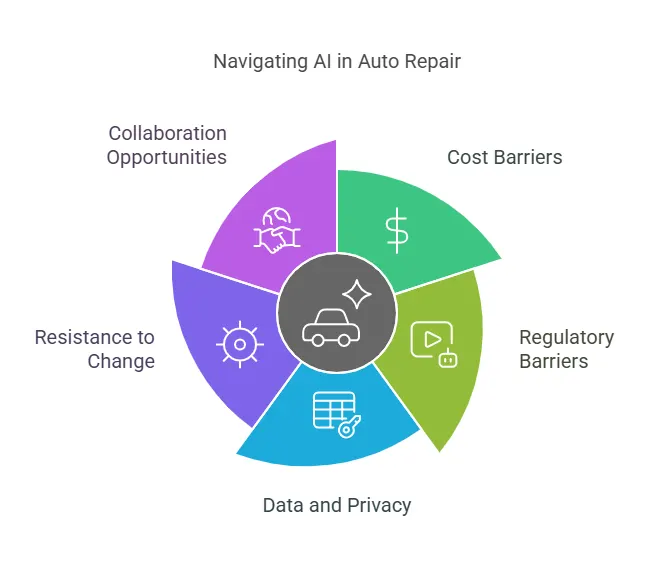
AI getting integrated with automobile industry will pose many challenges to the data and privacy for customers. It is necessary for manufacturers to secure data from breached.
While the benefits of AI in automotive repair are clear, not all businesses are quick to adapt. Concerns about cost, training, and integration can slow adoption. However, with the right guidance and strategy, even small repair shops can leverage AI to enhance their services.
Repair businesses can benefit greatly from partnerships with digital transformation and software engineering experts. These collaborations ensure smooth integration of AI tools and systems, allowing shops to stay competitive in a rapidly evolving industry.
The narrative of “AI taking over the vehicle repair industry” is less about replacement and more about enhancement. AI in automotive is empowering repair shops to deliver faster, smarter, and more reliable services. From predictive maintenance to advanced diagnostics and personalized customer interactions, AI is setting a new standard for the industry.
Companies like Neuronimbus are at the forefront of this transformation, offering tailored solutions in application development, digital strategy, and product design to help repair businesses navigate the complexities of AI adoption. By embracing these innovations, repair shops can not only survive but thrive in this exciting new era.
The question is no longer whether AI will shape the future of automotive repair – it already is. The real question is, are you ready to steer your business into the future?

Let Neuronimbus chart your course to a higher growth trajectory. Drop us a line, we'll get the conversation started.






Call Us

Schedule a Call


Your Next Big Idea or Transforming Your Brand Digitally
Let's talk about how we can make it happen.