In an age dominated by digital commerce, where customers expect seamless and personalized shopping experiences, businesses are increasingly turning to cutting-edge technology to bridge the gap between physical and online shopping. Among these innovations, virtual try-on technology has emerged as a game-changer, redefining how customers interact with products before making a purchase.
This article delves into the transformative power of virtual try-on solutions, explores the evolution of the “try and buy” experience, and examines their impact on industries ranging from retail to healthcare. Whether you’re a business exploring this technology or a consumer curious about its potential, here’s a comprehensive look at how virtual try-ons are shaping the future of commerce.
At its core, virtual try-on technology uses augmented reality (AR) and artificial intelligence (AI) to allow customers to visualize how products look on them or in their space without physically interacting with the items. It overlays digital images of products onto real-world visuals captured through cameras on smartphones, tablets, or computers.
For example:
The key elements that make virtual try-on solutions effective include:
These features make virtual try-on technology not only engaging but also highly functional, delivering an immersive shopping experience that boosts consumer confidence.
The “try and buy” concept has been a cornerstone of commerce for centuries, primarily rooted in brick-and-mortar shopping. Physical stores allowed customers to see, touch, and try products before committing to a purchase. But as e-commerce grew, the tactile element of shopping faded, often leaving consumers skeptical about buying items like clothing, makeup, or furniture online.
The advent of virtual try-on technology has revolutionized this landscape. By blending the convenience of online shopping with the interactivity of physical stores, businesses can now provide a hybrid solution that enhances customer experience while addressing long-standing challenges in e-commerce
For businesses, adopting virtual try-on solutions isn’t just about novelty—it’s about driving tangible results. Here’s how virtual try-ons are reshaping industries:
One of the biggest barriers in e-commerce is uncertainty. Virtual try-ons allow customers to visualize products in real-time, ensuring they feel confident about their choices. This leads to:
Returns are a major pain point for retailers, with clothing and beauty products leading the pack in return rates. Virtual try-ons help minimize this by offering a more accurate understanding of how products look or fit, leading to better purchase decisions.
Virtual try-ons provide a tailored experience by factoring in individual preferences and measurements. AI algorithms can recommend products that match a customer’s unique features, such as skin tone or body type, creating a highly personalized journey.
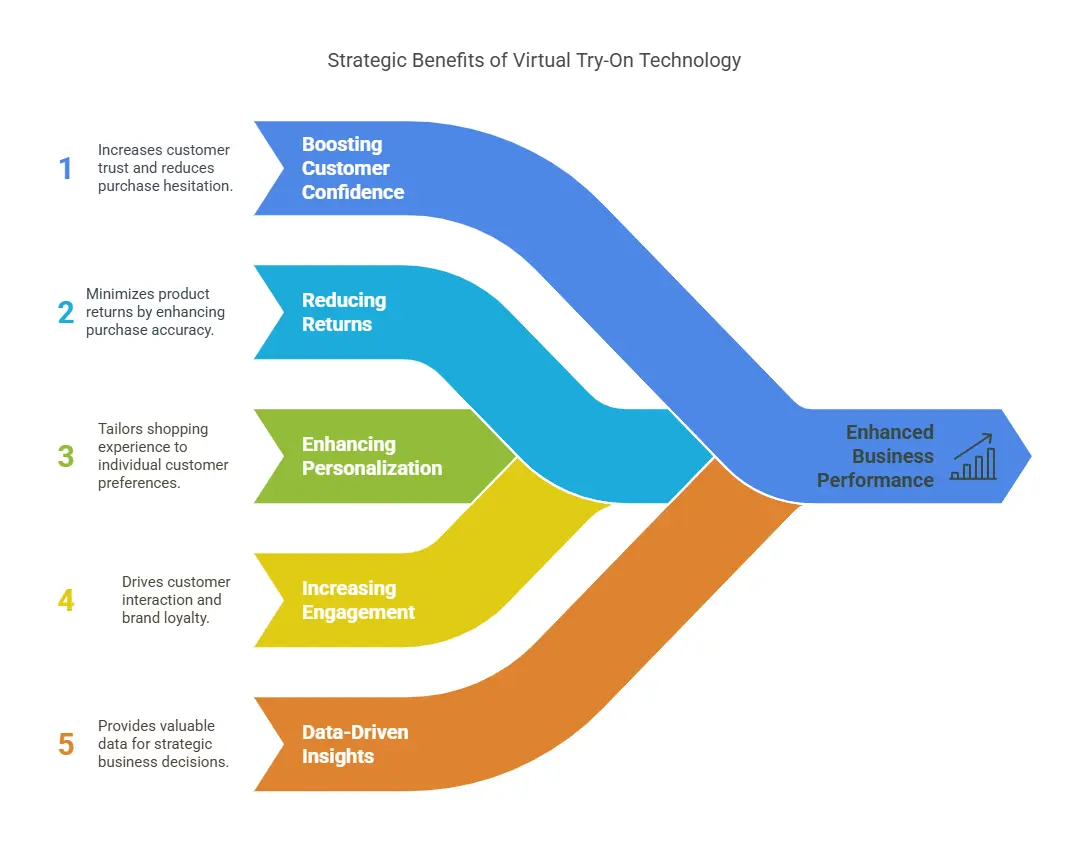
The interactive nature of virtual try-ons keeps customers engaged. By turning shopping into an experiential activity, businesses can:
– Drive longer session times on websites or apps.
– Encourage repeat visits and brand loyalty.
Every virtual interaction generates valuable data about customer preferences, behaviors, and needs. Businesses can use these insights to refine their product offerings, improve marketing strategies, and optimize inventory management.
Virtual try-on solutions have transcended retail to create value across multiple sectors. Here’s a closer look at their diverse applications:
Virtual try-ons solve one of the industry’s biggest challenges: fit and sizing discrepancies. Customers can:
Real-World Example: Major retailers like Zara and ASOS use virtual try-ons to showcase how clothing drapes, eliminating the need for extensive returns.
The beauty industry was among the first to adopt virtual try-ons, enabling customers to test products like lipstick, eyeshadow, and foundation virtually. Features like shade recommendations based on skin tone make these tools invaluable.
Real-World Example: L’Oréal’s virtual try-on tool allows users to try thousands of makeup products, boosting consumer confidence in online purchases.
Virtual try-ons have transformed eyewear shopping by allowing customers to see how different frames suit their face shape and personal style. They can also compare frame sizes for better fitting.
Real-World Example: Warby Parker’s virtual try-on app has been pivotal in replicating the in-store experience digitally.
Home improvement projects often require customers to visualize how furniture, paint, or décor will fit their space. Virtual try-ons provide a “see it in your room” option, making decisions easier.
Real-World Example: IKEA’s Place app uses AR to help customers visualize furniture in their homes, reducing buyer hesitation.
In healthcare, virtual try-ons are being used for dental aligners, prosthetics, and eyewear. Patients can preview medical devices, ensuring better comfort and satisfaction with their selections.
Despite its advantages, integrating virtual try-ons into business operations comes with its own set of challenges:
Developing virtual try-on solutions requires investments in AR/AI technologies, 3D modeling, and app development. For small businesses, these costs can be prohibitive.
Virtual try-ons often collect personal data, such as facial scans or sizing measurements. Businesses must prioritize security measures to ensure data protection and comply with regulations.
While smartphones and tablets are the primary devices for virtual try-ons, not all consumers have devices with the necessary specifications. Ensuring compatibility across a range of devices is essential.
Poor-quality visualizations can lead to consumer mistrust. Ensuring high fidelity in rendering products is key to maintaining credibility and user satisfaction.
To maximize the impact of virtual try-ons, businesses should follow these guidelines:
As technology evolves, virtual try-ons will only become more immersive and widespread. Key trends to watch include:
Virtual try-ons are more than just a tech trend—they’re a transformative force reshaping how businesses and customers engage. By merging convenience, personalization, and interactivity, this technology elevates the “try and buy” experience to new heights.
At Neuronimbus, we specialize in developing innovative virtual try-on solutions tailored to your business needs. From retail to healthcare, our expertise ensures seamless implementation and exceptional user experiences.
Ready to revolutionize your customer journey? Let’s collaborate to bring your vision to life.

Let Neuronimbus chart your course to a higher growth trajectory. Drop us a line, we'll get the conversation started.






Call Us

Schedule a Call


Your Next Big Idea or Transforming Your Brand Digitally
Let's talk about how we can make it happen.