
The retail industry is undergoing a seismic shift. The rise of e-commerce (electronic commerce) has fundamentally transformed how businesses interact with customers. Brick-and-mortar stores are no longer the sole battleground for sales. Today’s consumers expect a seamless omnichannel experience, effortlessly transitioning between physical and online shopping environments.
This digital revolution is fueled by cutting-edge technologies that are constantly reshaping the future of e-commerce. From intelligent product recommendations to immersive augmented reality experiences, these advancements are blurring the lines between the physical and digital worlds, creating a more engaging and personalized shopping experience.
Are you a business owner, tech innovator, or digital marketer looking to capitalize on the ever-evolving landscape of e-commerce? This blog post is your roadmap to success. We’ll delve into the advanced features that are redefining online shopping, explore innovative applications across various industries, and equip yourself with the knowledge to integrate these advancements into your own business strategy.
The most successful e-commerce platforms are not simply digital storefronts; they are sophisticated ecosystems powered by advanced features that personalize the customer journey and drive sales. Here, we’ll explore some of the most transformative features currently shaping the e-commerce landscape:
Artificial intelligence (AI) is revolutionizing the way online stores connect with customers. AI algorithms analyze user behavior, purchase history, and browsing patterns to generate personalized product recommendations.
This not only enhances the customer experience by suggesting relevant items but also boosts conversions by showcasing products with a higher chance of purchase. According to McKinsey & Company, personalization powered by AI can increase customer satisfaction by up to 75%, resulting in significant revenue growth for businesses.
Imagine virtually trying on clothes before you buy them, or placing furniture in your living room to see how it looks before it arrives. Augmented reality (AR) is making these experiences a reality, transforming online shopping into an interactive and immersive affair. AR apps allow users to overlay digital elements onto the real world through their smartphones or tablets. In the context of e-commerce, AR can be used for:
The rise of voice assistants like Amazon Alexa and Google Assistant has ushered in the era of voice commerce. Consumers are increasingly using voice search to find products online. E-commerce platforms that integrate voice search functionality allow users to search for products, compare prices, and even complete purchases using simple voice commands. This trend is expected to continue to grow, with Juniper Research predicting that voice assistants will have influenced over $80 billion in retail sales by 2023.
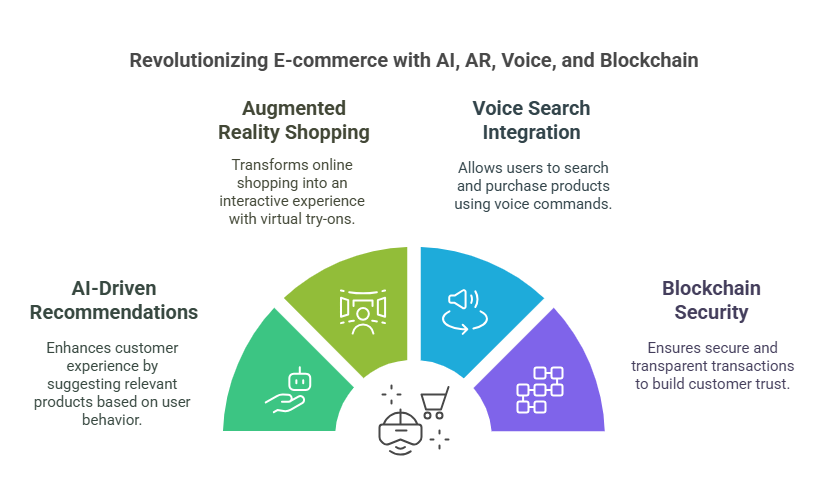
Security remains a paramount concern for online shoppers. Blockchain technology, known for its secure and transparent nature, is being increasingly adopted by e-commerce platforms to enhance payment security. Blockchain utilizes a distributed ledger system that creates a tamper-proof record of transactions. This not only protects customer data but also builds trust and encourages online purchases.
By implementing these advanced features, e-commerce platforms can create a more engaging and secure shopping experience, ultimately leading to increased customer satisfaction, improved conversion rates, and boosted sales.
The transformative power of e-commerce applications extends far beyond traditional retail sectors. Businesses across a wide range of industries are adopting innovative solutions to streamline operations, enhance customer experiences, and unlock new revenue streams. Here are some compelling examples:
The fashion industry is at the forefront of e-commerce innovation. E-commerce platforms in this sector are leveraging cutting-edge technologies to create a more engaging and personalized shopping experience.
Utilizing AI algorithms and user data, fashion retailers can recommend personalized outfits and styles to customers. This not only simplifies the shopping experience but also increases the likelihood of customers discovering and purchasing new items.
As discussed earlier, AR is transforming the way customers shop for clothes. Virtual try-on features allow users to see how garments will look on them before making a purchase. This reduces the need for returns and fosters customer confidence in their buying decisions.
Retailers can leverage AI to analyze vast amounts of data, including social media trends and customer purchase history, to predict upcoming fashion trends. This allows them to stock their online stores with the most in-demand items and stay ahead of the curve.
The furniture and home goods industry has traditionally relied on brick-and-mortar stores for customer engagement. However, e-commerce applications are revolutionizing this sector as well.
AR allows customers to virtually place furniture pieces in their homes to see how they will look and fit within the space. This eliminates the guesswork associated with online furniture purchases and increases customer confidence.
Case Study: IKEA Place, the AR app by IKEA, enables users to virtually place furniture in their homes, leading to a significant increase in customer engagement and satisfaction.
E-commerce platforms can leverage AI to optimize inventory management for furniture and home goods. AI algorithms can analyze sales data and predict future demand, allowing retailers to maintain optimal stock levels and minimize the risk of stockouts.
The healthcare and pharmaceutical industries are also embracing e-commerce applications to improve patient care and streamline operations.
E-commerce platforms can facilitate online appointment booking and telemedicine consultations. This allows patients to schedule appointments and receive medical advice remotely, improving convenience and accessibility.
Patients can utilize e-commerce platforms to refill prescriptions and have them delivered directly to their homes. This not only saves time but also improves medication adherence.
These are just a few examples of how various industries are harnessing the power of e-commerce applications. As technology continues to evolve, we can expect even more innovative solutions to emerge, further blurring the lines between the physical and digital worlds of commerce.

Integrating advanced e-commerce features into your existing business model doesn’t have to be a daunting task. By following a step-by-step approach and leveraging the right tools, you can unlock the full potential of e-commerce and gain a significant competitive edge.
The first step involves a thorough evaluation of your current business model and target audience. Identify areas where e-commerce technologies can address existing challenges or enhance customer experiences. Carefully plan the features you want to integrate, considering your budget and technical capabilities.
The foundation of your online store is the e-commerce platform. Choose a platform that is scalable, secure, and offers the features you require. Popular options include Shopify, Magento, and WooCommerce.
Ensure seamless integration between your e-commerce platform and existing business systems such as inventory management, customer relationship management (CRM), and accounting software. Prioritize robust data security measures to protect customer information and financial transactions.
Investing in employee training is crucial for successful e-commerce implementation. Equip your team with the knowledge and skills to manage the e-commerce platform, fulfill online orders, and provide excellent customer service.
Develop a comprehensive marketing strategy to drive traffic to your online store. Utilize social media marketing, search engine optimization (SEO), and email marketing to reach your target audience. Prioritize engaging content and exceptional customer service to build brand loyalty and encourage repeat business.
By following these steps and utilizing the available tools, you can effectively integrate e-commerce technologies into your business operations and unlock a world of new possibilities.
The e-commerce landscape is constantly evolving, with new trends emerging all the time. Here’s a peek into what the future holds for e-commerce:
Imagine refrigerators automatically placing orders for groceries when supplies run low, or smart clothing seamlessly integrating with fitness trackers. The Internet of Things (IoT) has the potential to revolutionize e-commerce by creating a more connected and automated shopping experience.
Machine learning algorithms will become even more sophisticated, enabling e-commerce platforms to personalize the shopping experience to an unprecedented level. Customers can expect highly targeted product recommendations, dynamic pricing, and customized content based on their individual preferences and purchase history.
Social media platforms will continue to play a significant role in e-commerce. Features like shoppable posts and live streaming will make it easier for customers to discover and purchase products directly on social media platforms.
The future of retail is intricately linked with the dynamic world of e-commerce. By embracing advanced features, exploring innovative applications, and strategically integrating these technologies into your business model, you can position yourself for unparalleled success in the competitive retail landscape.
E-commerce is not just a trend—it’s a revolution that’s reshaping the way businesses and consumers interact. With technologies like AI-driven recommendations, augmented reality, and blockchain for payment security, the possibilities are endless. These advancements are not only enhancing customer experiences but also driving significant growth and operational efficiency.
Are you ready to harness the power of e-commerce and take your business to new heights? Partner with Neuronimbus, a leader in e-commerce development, to explore how we can help you implement a customized solution tailored to your specific needs. Our expertise in integrating cutting-edge technologies ensures that your business stays ahead of the curve, driving sales and fostering customer loyalty.
The world of e-commerce is brimming with potential. Don’t get left behind. Take the first step towards e-commerce success with Neuronimbus. Schedule a consultation today and revolutionize your business for the future.


Let Neuronimbus chart your course to a higher growth trajectory. Drop us a line, we'll get the conversation started.






Call Us

Schedule a Call


Your Next Big Idea or Transforming Your Brand Digitally
Let's talk about how we can make it happen.