
Artificial intelligence (AI) is revolutionizing the e-commerce industry, driving a new era of innovation and efficiency. Shopping has undergone significant transformations over the decades—from specialized stores to bustling shopping malls and, more recently, the dominance of online shopping. Now, the industry is on the verge of yet another major shift, with AI and machine learning emerging as game-changers in the competitive e-commerce landscape.
Retailers are increasingly leveraging AI-powered tools to enhance customer experience, optimize operations, and maximize sales. From personalized product recommendations and chatbots that provide instant support to automated inventory management and predictive analytics, AI is making online shopping more seamless and intuitive than ever before. These technologies enable businesses to predict consumer behavior, streamline logistics, and reduce costs, helping them stay ahead in a rapidly evolving market.
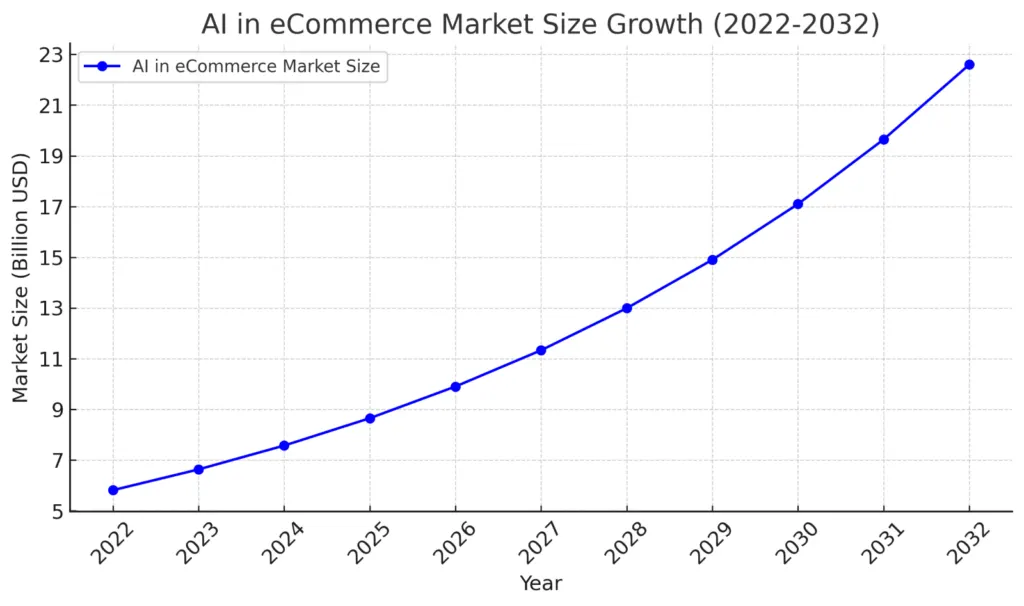
The impact of AI in e-commerce is growing at an unprecedented pace. The sector’s AI-driven market is projected to reach $8.65 billion by 2025 and nearly double to $17.1 billion by 2030. As AI continues to evolve, its influence on the industry will only deepen, reshaping how businesses operate and how consumers shop in the digital age.
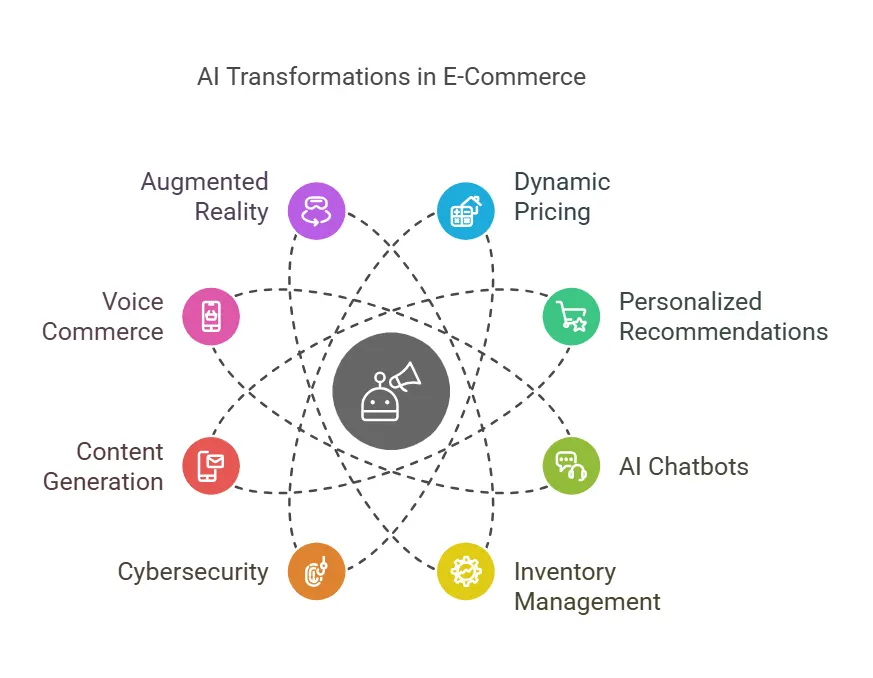
AI is already playing a crucial role in e-commerce, offering businesses innovative solutions for increasing efficiency and improving customer satisfaction. Here are some of the most notable applications of AI in the industry.
AI-powered dynamic pricing algorithms adjust product prices in real-time based on demand, competitor pricing, and customer behavior. Amazon is one of the pioneers of this technology, using AI to optimize prices and boost sales while maximizing profit margins. By leveraging AI, businesses can implement automated discounting strategies, ensuring they remain competitive while maximizing profitability.
AI-driven recommendation engines analyze customer data, such as past purchases, browsing history, and preferences, to suggest relevant products. This technology is used by leading e-commerce platforms like Amazon and Shopify to increase customer engagement and drive sales.
The AI continuously refines its suggestions as it gathers more data, making each recommendation more accurate and personalized, ultimately increasing the likelihood of conversions.
AI-powered chatbots and virtual assistants enhance customer service by providing instant responses to inquiries, guiding users through the buying process, and even handling order tracking. Sephora, for instance, has integrated AI-driven voice search to help customers find beauty products effortlessly. These AI-driven assistants are available 24/7, improving customer satisfaction and reducing the need for human support agents.
AI helps e-commerce businesses optimize inventory levels by predicting demand fluctuations. Companies like Walmart use AI-driven inventory management systems to ensure that stock levels align with customer demand, preventing overstock and stockouts. Additionally, AI-powered logistics solutions help optimize supply chains by predicting delays, automating restocking, and reducing waste, ultimately improving operational efficiency.
AI plays a significant role in fraud prevention by analyzing transaction patterns and identifying suspicious activities. AI-powered fraud detection tools help e-commerce businesses reduce fraudulent transactions and secure customer data. By monitoring user behavior, AI can detect anomalies and flag potential fraud in real time, minimizing risks and protecting both businesses and customers from cyber threats.
E-commerce companies are using AI to generate product descriptions, blog posts, and marketing content. Shopify’s AI-generated product descriptions are a prime example of how businesses can use AI to automate content creation and improve SEO.
AI can analyze customer search intent, optimize keywords, and structure content in a way that improves visibility in search engine rankings. Additionally, AI tools can generate high-quality visuals and videos, enhancing the overall digital shopping experience.
AI enhances targeted marketing by segmenting customers based on their behavior, preferences, and purchasing history. This enables businesses to deliver personalized ads, email campaigns, and promotions that increase conversion rates.
AI-driven automation ensures that marketing efforts are optimized in real time, increasing customer engagement and reducing ad spend inefficiencies. Companies can also use AI to predict which customers are most likely to churn and implement targeted retention strategies to improve customer loyalty.
The rise of virtual assistants like Alexa, Google Assistant, and Siri has led to the adoption of AI-powered voice commerce. Customers can now search for products, place orders, and interact with e-commerce platforms using voice commands. This innovation simplifies the shopping process and enhances accessibility, making online shopping more convenient for users.
AI-driven augmented reality (AR) solutions allow customers to visualize products in real-world environments before purchasing. This is especially useful for industries like fashion, beauty, and home decor. Companies like IKEA and Sephora have integrated AR-powered AI tools to enable customers to virtually try on products or preview furniture placement in their homes.
AI-powered predictive analytics helps businesses forecast future sales trends, optimize inventory levels, and plan marketing strategies. By analyzing historical sales data, AI can predict seasonal trends, helping retailers prepare for increased demand during peak shopping seasons. This reduces waste, prevents stockouts, and improves profitability.
The integration of AI in e-commerce brings numerous benefits, making it a valuable investment for online businesses. Here are some of the key advantages.
AI automates repetitive tasks such as customer service, inventory tracking, and data analysis, allowing businesses to operate more efficiently while reducing reliance on human labor. Automation frees up employees to focus on higher-value tasks, such as strategic planning and customer engagement.
AI-driven personalization creates a more engaging shopping experience, ensuring that customers receive relevant product recommendations, customized promotions, and seamless interactions. AI-powered chatbots and virtual assistants provide instant support, reducing wait times and improving overall satisfaction.
AI-powered marketing strategies optimize customer engagement, leading to higher conversion rates. Personalized recommendations and targeted ads contribute to increased sales and customer loyalty. AI-driven demand forecasting ensures that businesses stock the right products at the right time, reducing lost sales due to stockouts.
AI helps e-commerce businesses cut costs by streamlining processes such as order fulfillment, customer support, and inventory management. AI-powered automation minimizes manual errors, reduces waste, and improves operational efficiency, leading to higher profitability.
AI-driven fraud detection tools enhance the security of online transactions, protecting businesses and customers from cyber threats and unauthorized purchases. AI continuously learns from fraudulent behavior, adapting its detection methods to identify new security risks.
AI-powered predictive analytics enable businesses to anticipate market trends and optimize their inventory levels accordingly, preventing stock shortages or overstocking. Businesses can respond proactively to shifts in demand, ensuring they stay ahead of competitors.
AI helps businesses make data-driven decisions by analyzing vast amounts of data in real time. Insights generated from AI analytics help companies refine their marketing strategies, pricing models, and product offerings.
E-commerce businesses that leverage AI effectively gain a competitive edge by offering superior customer experiences, personalized interactions, and optimized operations. Companies that fail to adopt AI may struggle to keep up with evolving consumer expectations.
The use of AI in e-commerce is not just theoretical; many leading brands have successfully implemented AI-driven solutions to enhance their operations. Here are a few examples.
1. Amazon: Uses AI for dynamic pricing, personalized recommendations, and an AI-powered assistant called Amazon Q.
2. Shopify: Implements AI-generated product descriptions and smart inventory management tools.
3. Sephora: Incorporates voice search and AI-powered makeup assistants for visually impaired customers.
4. Walmart: Uses AI to optimize inventory management and predict customer demand.
5. Alibaba: Employs AI chatbots and facial recognition for seamless shopping experiences.
AI is used in many real-world applications in e-commerce, including demand forecasting, inventory management, and personalized recommendations.
These companies and applications demonstrate how AI is fundamentally transforming the e-commerce industry, offering innovative solutions that cater to modern consumer needs.
AI technology is constantly evolving, and its future applications in e-commerce are promising. Here are some of the major trends shaping the future of AI-powered online shopping.
With the increasing adoption of virtual assistants like Alexa and Google Assistant, voice commerce is expected to become more prominent. AI will enable seamless voice-activated shopping experiences for customers.
AR-powered AI solutions will enhance product visualization, allowing customers to try products virtually before making a purchase. This trend is particularly relevant for fashion, beauty, and furniture e-commerce brands.
AI will revolutionize supply chain logistics, ensuring faster and more efficient deliveries. Research suggests that AI-powered last-mile delivery solutions will be a top priority for e-commerce companies by 2030.
AI-generated content will continue to evolve, enhancing marketing campaigns, social media engagement, and customer outreach efforts.
AI-powered visual search and personalized search functionalities will make online shopping experiences more intuitive, helping users find products faster and more efficiently.
Neuronimbus is at the forefront of AI-driven e-commerce solutions, helping businesses leverage AI to optimize their operations and customer experiences. Their AI-powered tools offer:
By integrating Neuronimbus’ AI solutions, e-commerce businesses can stay ahead of the competition and future-proof their operations in an AI-driven marketplace.
AI is revolutionizing e-commerce, offering unprecedented opportunities for businesses to enhance customer experience, streamline operations, and increase revenue. From dynamic pricing and personalized recommendations to AI-powered marketing and security, the benefits of AI are undeniable.
As AI technology continues to advance, businesses that embrace AI-driven solutions will have a competitive edge in the rapidly evolving e-commerce landscape. Whether through personalized shopping experiences, efficient inventory management, or fraud prevention, AI is set to redefine the future of online retail.
AI in e-commerce uses machine learning, predictive analytics, and automation to improve online shopping. It enables dynamic pricing, personalized recommendations, chatbots, fraud detection, and smarter inventory management. By analyzing customer behavior and market trends, AI helps businesses optimize operations and deliver seamless, engaging shopping experiences.
AI enhances customer experience by offering personalized recommendations, instant chatbot support, and voice-assisted shopping. It analyzes customer data to create tailored promotions and product suggestions. Additionally, AI-powered AR tools let customers visualize products virtually, ensuring convenience and boosting confidence in purchase decisions.
Key applications of AI in e-commerce include dynamic pricing, personalized product recommendations, chatbots, inventory management, fraud detection, AI-powered SEO, AR shopping, and predictive analytics. These solutions streamline operations, improve customer engagement, and increase profitability while helping businesses remain competitive in a rapidly evolving online marketplace.
AI predicts demand fluctuations, automates restocking, and optimizes inventory levels. Retailers like Walmart use AI to balance stock availability, preventing shortages and overstock. AI-powered logistics systems forecast delays, streamline delivery routes, and reduce waste, ensuring efficient supply chain operations and improved customer satisfaction.
Yes, AI boosts sales by providing personalized recommendations, targeted ads, and optimized pricing strategies. Predictive analytics ensures the right products are available at the right time. AI-driven marketing increases engagement, while automated customer support reduces friction, creating seamless shopping journeys that drive conversions and long-term loyalty.
AI continuously monitors transactions and user behavior to detect unusual patterns. It flags suspicious activities like payment fraud or account takeovers in real time. By adapting to new threats, AI-driven fraud detection enhances cybersecurity, protecting both businesses and customers while ensuring safe, reliable online shopping experiences.
AI revolutionizes marketing by segmenting customers, predicting behavior, and automating campaigns. It helps deliver personalized emails, ads, and promotions based on real-time insights. Generative AI also creates optimized content for SEO, social media, and product descriptions, ensuring campaigns resonate with audiences while improving efficiency and ROI.
Emerging trends include voice commerce, AI-driven augmented reality shopping, advanced fraud detection, last-mile delivery optimization, and generative AI for marketing. AI-enhanced search and discovery will make product finding easier. These advancements promise highly personalized, secure, and efficient online shopping experiences, transforming how consumers and businesses interact.
AI provides benefits like increased efficiency, reduced operational costs, enhanced personalization, and improved decision-making. It automates repetitive tasks, optimizes inventory, and predicts customer demand. Businesses gain higher conversion rates, better customer satisfaction, and stronger competitiveness in a crowded digital marketplace through smarter data-driven strategies.
Neuronimbus’ AI solutions empower businesses with personalized recommendations, smart inventory management, AI-driven marketing, advanced fraud detection, and intelligent chatbots. These tools help improve customer engagement, reduce costs, and optimize operations. By adopting such solutions, e-commerce companies can stay competitive, future-proof their operations, and deliver exceptional experiences.
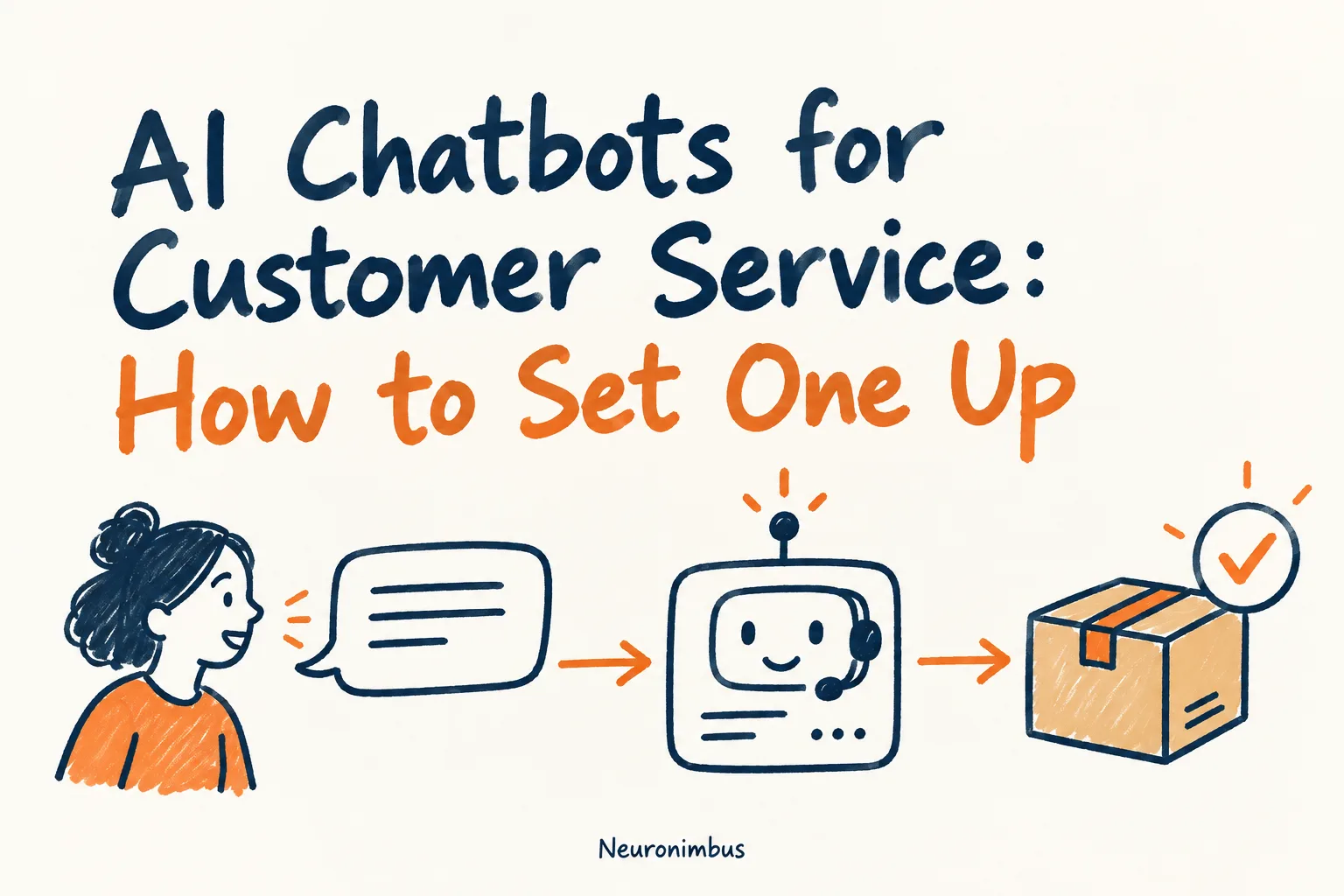

Let Neuronimbus chart your course to a higher growth trajectory. Drop us a line, we'll get the conversation started.






Call Us

Schedule a Call


Your Next Big Idea or Transforming Your Brand Digitally
Let's talk about how we can make it happen.